Autumn in sight edition: Yearly costs are all paid for, time to donate if you can!//DA4 concept art, Anthem revamp, ME HD remaster, hey, it's something
Books and Reading
-
SciFlyBoy
- Posts: 2660
- Joined: August 8th, 2016, 1:54 pm
- Location: somewhere in the Alpha Quadrant
- Contact:
Re: Books and Reading
I remember reading about those locusts in a Bill Bryson book. I think it was 'At Home' because I don't remember it in 'A Short History of Nearly Everything'. He mentioned how plowing the earth probably killed all their eggs.
fancy signature

Re: Books and Reading
Finished my book on China. I'm going to keep going with this for now though unfortunately there just aren't as many good audiobooks on Chinese history as I hoped. There's 87345448473 written by every pundit who fancies themselves a political strategist on "confronting China" or whatever but hardly anything that are just non sensationalist history books. And even then the only things anybody seems to want to write about are The Cultural Revolution, WWII, and Mao.
Anyway, next one I'm going to try is this one:

Basically, there is an ideology that Chinese civilization is one continuous civilization that has lasted for 4000 years. Various dynasties and now the CCP validate their centralized rule on the idea that they are inheritors of this sacred order handed down across the ages (once upon a time validated by the Mandate of Heaven). The book I just read more or less accepted this idea (sans Mandate of Heaven stuff) and presented China as one civilization with ups and downs that sometimes disintegrated but always came back together.
Some argue that this idea is complete propaganda and moreover recent propaganda. That while there's been continuity between various empires in China in some ways, it has always been imperial and not really "One China." At different times ruled by different ethnicities (Manchus, Mongols, etc.), spent periods in schism with multiple contending dynasties, always had massive numbers of ethnic minorities with varying degrees of autonomy, and so on. Anyway, this other book argues that not only is the "One China" idea not true, but that it was made up very recently in the last 100 years or so. Seems a good counterbalance and these together a decent bird's eye view of China before trying to get more into the weeds if I keep going.
Anyway, next one I'm going to try is this one:
Basically, there is an ideology that Chinese civilization is one continuous civilization that has lasted for 4000 years. Various dynasties and now the CCP validate their centralized rule on the idea that they are inheritors of this sacred order handed down across the ages (once upon a time validated by the Mandate of Heaven). The book I just read more or less accepted this idea (sans Mandate of Heaven stuff) and presented China as one civilization with ups and downs that sometimes disintegrated but always came back together.
Some argue that this idea is complete propaganda and moreover recent propaganda. That while there's been continuity between various empires in China in some ways, it has always been imperial and not really "One China." At different times ruled by different ethnicities (Manchus, Mongols, etc.), spent periods in schism with multiple contending dynasties, always had massive numbers of ethnic minorities with varying degrees of autonomy, and so on. Anyway, this other book argues that not only is the "One China" idea not true, but that it was made up very recently in the last 100 years or so. Seems a good counterbalance and these together a decent bird's eye view of China before trying to get more into the weeds if I keep going.
Re: Books and Reading
Since Grant was mentioned earlier, he came up in this book I'm reading now. Apparently he went on a world tour after his second term and was enlisted by the Chinese as an intermediary to try to settle some disputes with Japan over territorial and sovereignty issues. Dunno if he talks about that in his memoir but it was certainly the first I heard of it.
There was also apparently a plot to assassinate him in Japan for some reason.
There was also apparently a plot to assassinate him in Japan for some reason.

Re:
► Show Spoiler
Link to that article by chance?
*Edit*
To continue my book spam and China run. Going on to this now:

If I'm not completely sick of China after that, there is one on Chinese usage of silver through the ages I think I will try after that. That sounds really pedantic, but it's probably a good way to look at general history of China because they were massively integrated into the silver trade and thus indirectly into both the slave trade and the opening of the Americas. To say "history of China and silver" is rather to say "Chinese economic/trade history of the last 500 years or more."
-
SciFlyBoy
- Posts: 2660
- Joined: August 8th, 2016, 1:54 pm
- Location: somewhere in the Alpha Quadrant
- Contact:
Re: Books and Reading
Ragabul wrote:Since Grant was mentioned earlier, he came up in this book I'm reading now. Apparently he went on a world tour after his second term and was enlisted by the Chinese as an intermediary to try to settle some disputes with Japan over territorial and sovereignty issues. Dunno if he talks about that in his memoir but it was certainly the first I heard of it.
There was also apparently a plot to assassinate him in Japan for some reason.
Whoa! I had no idea. His Memoires really only tell the tale of his early life, early military career, life before the war and then the entire war and ends a couple months after Lincoln's assassination.
There are about three really good biographies on him now, so I plan on picking one up and reading about his presidency and there after.
fancy signature
Re: Books and Reading
Interesting bit from my Shinto book. "Mikoshi" is the name for those large, ornate palanquins that the Japanese carry around during festivals. Kami in any shrine that has a proper building and priest will have a holiest of holies, inner sanctum, with a physical object that the kami inhabits, an ark of the covenant. During festivals, in order to let the kami go out into the world and have fun, there's a symbolic transfer from the sacred object to the mikoshi, but not a literal removal of the object. Sort of like leaving your home to go to a house party and being told "mi casa es tu casa," but more reverent. Then the mikoshi is paraded around, according to local customs, before eventually returning "home."
Cyberpunk players will get a sensible chuckle.
Cyberpunk players will get a sensible chuckle.
Re: Books and Reading
More Shinto: Follows the same pattern as the west, probably because of it, in terms of integration into daily life. Initially, there is no delineation, you don't go the shrine once in a while, do a prayer, then ignore it until next time. You do this and that, go here and there, because that's what you do, it doesn't stop or turn off, it's as much of daily life as anything else. But with the opening to the west, the nationalization effort became more overt, and multiple different iterations of government agencies to deal with the shrines and priests and such, came and went. Whereas the Shintoists themselves wanted the ancient version, an office of divine business, which would be more theologically minded than paper-pushing and penny-pinching. Then with the Meiji restoration into WW2, it becomes more pronounced. Government actively controls and regulates shrines, priests, and preaching in a system that was always communally minded and somewhat controlled, but had distinct local flavor and was held up by that local participation. Bringing it under centralized control, for political purposes, led to the US occupation to take a hammer to the systems. Which, as of the writing of this book, was actually better for it. I imagine right now, it's a pretty dire state, because economic realities and cultural "changes" are not going to inspire much deeper participation than a few common ritualistic visits.

Re: Books and Reading
Read the first Sten Chronicles omnibus and was deeply unimpressed, so far that the book landed in the trash can.
I've been starting with the High Republic books and while they are generally competently written (i.e. mediocre), I have problems getting into the setting. I think my biggest gripe is that the Jedi seem truly incompetent, tripping on their dicks while getting trounced repeatedly by a bunch of pirates with clunky face masks and tear gas. The Nihil seem laughable compared to enemies the Republic and Jedi had to face over the millenia, but still manage to outplay them at basically every turn. They also pull new tech and eldritch horror monsters right out of their ass when they get cornered and never seem to run out of manpower and ships to throw at the Republic and Jedi.
It also doesn't help that the reading order is haphazard, with important parts of the story strewn over different media (books, YA books, comics), so that you need a fricking guide to know where to go next. All in all, I probably will continue with the series in lieu of trying twenty different authors to find something worthwhile, but it's pretty far from being a really good series of books.
I've been starting with the High Republic books and while they are generally competently written (i.e. mediocre), I have problems getting into the setting. I think my biggest gripe is that the Jedi seem truly incompetent, tripping on their dicks while getting trounced repeatedly by a bunch of pirates with clunky face masks and tear gas. The Nihil seem laughable compared to enemies the Republic and Jedi had to face over the millenia, but still manage to outplay them at basically every turn. They also pull new tech and eldritch horror monsters right out of their ass when they get cornered and never seem to run out of manpower and ships to throw at the Republic and Jedi.
It also doesn't help that the reading order is haphazard, with important parts of the story strewn over different media (books, YA books, comics), so that you need a fricking guide to know where to go next. All in all, I probably will continue with the series in lieu of trying twenty different authors to find something worthwhile, but it's pretty far from being a really good series of books.
Re: Books and Reading
I was going to say "Nihil" isn't all that subtle, but then I remembered that's Star Wars.
Though it's how Jedi are usually written, from the stories and games I've experienced. Utterly blind and innocent at worst. TOR did a decent job of examining it from different angles. But short of actually having writers try to learn from real traditions to get into the mindset of ascetic magic power monks, what can be done?
Though it's how Jedi are usually written, from the stories and games I've experienced. Utterly blind and innocent at worst. TOR did a decent job of examining it from different angles. But short of actually having writers try to learn from real traditions to get into the mindset of ascetic magic power monks, what can be done?
Re: Books and Reading
I guess my point is that Jedi tend to be underwritten in their power level in the post-Disney takeover. Compared to prior EU Jedi, it's jarring to see them killed off by a bunch of pirates that easily.
Re: Books and Reading
What was the expected quality of an average Jedi during the High Republic?
Re: Books and Reading
Vol wrote:What was the expected quality of an average Jedi during the High Republic?
Who knows? There is no exact metric with which to measure what the power level of the "average Jedi" is expected to be. My meaning is that overall the Jedi in the books I've read feel underpowered compared to old EU Jedi. They certainly seem easier to kill, if rando space pirates can easily kill a dozen or so of them in space combat.
Re: Books and Reading
magnuskn wrote:Who knows? There is no exact metric with which to measure what the power level of the "average Jedi" is expected to be. My meaning is that overall the Jedi in the books I've read feel underpowered compared to old EU Jedi. They certainly seem easier to kill, if rando space pirates can easily kill a dozen or so of them in space combat.
An unpleasant side effect of making them into a formal organization in the Prequels and beyond, I guess. Once you have academies and official Temples and codified systems of finding recruits and training them up, takes the mystique right out of it. But yeah, unless the Jedi are literally not trained for combat, or the space pirates are very well armed, that's excessive.
-
SciFlyBoy
- Posts: 2660
- Joined: August 8th, 2016, 1:54 pm
- Location: somewhere in the Alpha Quadrant
- Contact:
Re: Books and Reading
I finished Marcus Aurelius.
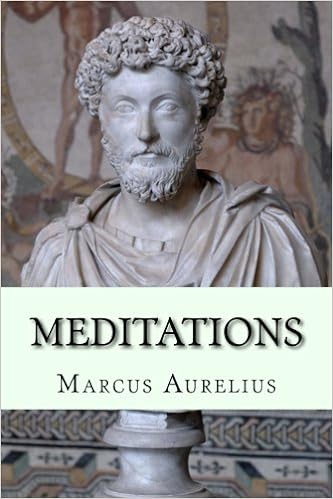
It might be titled 'Meditations' in some versions.
It's a book one must look at every now and then, as instead of having a narrative it lists points to consider and it's good to find one and ponder on it for a while. The dude wrote it as a series of personal notes to himself and I doubt most people even write once about how to think about one's own thoughts and act in certain situations.
A lot of common themes are;
Death: We're closer every day to it. We're all getting older, it's not bad but a good thing. Consider today your last and make it worth it.
Community: We're all a part of the body of mankind and not separate.
You've been wronged: Don't take things personally, mistakes happen. Let bad things flow like duck off a water's back.
Others: When someone does wrong, teach them how to do it right.
Fear about the future? Nothing that happens to you hasn't already happened to someone already.
Nature and intellect: It's ingrained in you through nature to be intelligent and logical. Do nature proud by being intelligent and just.
I hope I conveyed his points accurately.
He'll write different versions of each and bring some topics up continuously. The ones he brings up the most are of course those that bother us the most, that eat away at us and do us harm if we respond poorly.
All in all a great read and worth a look into. It's not too big, 10 sections at 30 to 40 points each.
I like how he is on a first name basis with Julius Caesar. He calls him Caius.
Oh, I plan on reading Caius' memories too one day.
It might be titled 'Meditations' in some versions.
It's a book one must look at every now and then, as instead of having a narrative it lists points to consider and it's good to find one and ponder on it for a while. The dude wrote it as a series of personal notes to himself and I doubt most people even write once about how to think about one's own thoughts and act in certain situations.
A lot of common themes are;
Death: We're closer every day to it. We're all getting older, it's not bad but a good thing. Consider today your last and make it worth it.
Community: We're all a part of the body of mankind and not separate.
You've been wronged: Don't take things personally, mistakes happen. Let bad things flow like duck off a water's back.
Others: When someone does wrong, teach them how to do it right.
Fear about the future? Nothing that happens to you hasn't already happened to someone already.
Nature and intellect: It's ingrained in you through nature to be intelligent and logical. Do nature proud by being intelligent and just.
I hope I conveyed his points accurately.
He'll write different versions of each and bring some topics up continuously. The ones he brings up the most are of course those that bother us the most, that eat away at us and do us harm if we respond poorly.
All in all a great read and worth a look into. It's not too big, 10 sections at 30 to 40 points each.
I like how he is on a first name basis with Julius Caesar. He calls him Caius.
Oh, I plan on reading Caius' memories too one day.
fancy signature
Re: Books and Reading
I have Meditations, but didn't get very far in it. It's as you say, one of those books you need to read a little bit, then reflect. And also keep in mind who was writing it, for himself, and relative station.
My bigger take away is the universality of some of the passages, at least as far in as I read. We're saying the same stuff, but in far less romantic, meaningful ways, as he did, as humans always have. A lot of this is carved into our hearts, but we don't really "get it" either.
My bigger take away is the universality of some of the passages, at least as far in as I read. We're saying the same stuff, but in far less romantic, meaningful ways, as he did, as humans always have. A lot of this is carved into our hearts, but we don't really "get it" either.
Re: Books and Reading
Finished American Pilgrim, by Roosh V. Getting to that point where the half dozen books I'm reading are all nearing the end at the same time.
As men, he was my exact opposite. Extrovert, charismatic, international playboy, partyer, etc. None of that lifestyle appealed to me, and after hitting the peak of that world, he lost the ability to even enjoy it. Then his sister died from resurgent cancer, a woman he was seeing seriously ended up being a cheater, and he ended up turning into a pretty hardcore Orthodox Christian. Still is, looking at his current work. To the point where he seems to want to be a monastic, but can't quite get there.
Quite a journey. Most of the book is about a nationwide speaking tour he did after unpublishing his very successful books on how to cajole women into having sex with you, and the suffering/lessons he learns over the course. The most interesting parts were less so what literally happens, since most chapters are a riff on going to a big city or small town, finding it horrible and degenerate/cozy and pleasant, and then detailing how the speech there went. But rather his new interpretation of what we all would otherwise think of as chance coincidence, bad/good luck. It's a mindset I have a hard time picturing without becoming unmoored from the world. Which I suppose would be the point in this case.
If nothing else, reading about a man who by all measures appears to have actually completely discarded a life of sexual pleasure and wealth for a kind of asceticism is remarkable. How often does that ever happen?
As men, he was my exact opposite. Extrovert, charismatic, international playboy, partyer, etc. None of that lifestyle appealed to me, and after hitting the peak of that world, he lost the ability to even enjoy it. Then his sister died from resurgent cancer, a woman he was seeing seriously ended up being a cheater, and he ended up turning into a pretty hardcore Orthodox Christian. Still is, looking at his current work. To the point where he seems to want to be a monastic, but can't quite get there.
Quite a journey. Most of the book is about a nationwide speaking tour he did after unpublishing his very successful books on how to cajole women into having sex with you, and the suffering/lessons he learns over the course. The most interesting parts were less so what literally happens, since most chapters are a riff on going to a big city or small town, finding it horrible and degenerate/cozy and pleasant, and then detailing how the speech there went. But rather his new interpretation of what we all would otherwise think of as chance coincidence, bad/good luck. It's a mindset I have a hard time picturing without becoming unmoored from the world. Which I suppose would be the point in this case.
If nothing else, reading about a man who by all measures appears to have actually completely discarded a life of sexual pleasure and wealth for a kind of asceticism is remarkable. How often does that ever happen?
Re: Books and Reading
Finished The Death of WCW for the third time. Not sure if any of you were into pro-wrestling in the 90s, but it was _the_ big thing in America for a long while. At it's peak, had a massive percent of all TV viewership every Monday night.
Beyond all the amusing anecdotes and blistering incompetence and stuff, what sticks with me is the pattern of what's happened everywhere else. Many territorial companies plied their trade, the job was hard, pay was low, but gold could sift to the top. Then Vince McMahon manages to gather the capital to force himself national, and everyone else is either gobbled up in time, or tries to compete and can't sustain it. Only WCW did, with Ted Turner's personal backing (until the AOL merger and he lost power to do so). And then after years of complete retardation, WCW dies, ECW dies for financial reasons, and we have WWF as the monopoly, and it's never quite as good as what it was before.
Beyond all the amusing anecdotes and blistering incompetence and stuff, what sticks with me is the pattern of what's happened everywhere else. Many territorial companies plied their trade, the job was hard, pay was low, but gold could sift to the top. Then Vince McMahon manages to gather the capital to force himself national, and everyone else is either gobbled up in time, or tries to compete and can't sustain it. Only WCW did, with Ted Turner's personal backing (until the AOL merger and he lost power to do so). And then after years of complete retardation, WCW dies, ECW dies for financial reasons, and we have WWF as the monopoly, and it's never quite as good as what it was before.
-
SciFlyBoy
- Posts: 2660
- Joined: August 8th, 2016, 1:54 pm
- Location: somewhere in the Alpha Quadrant
- Contact:
Re: Books and Reading
Had to pick up a book related to music business, so I found one about "How to sign a record deal", but in the 2020s where the author strikes out the title and instead titles it 'Sign Yourself.' It dives into how to create momentum and get a following of true fans and make yourself the type of musician/business person that record companies beg to sign. I can apply that to production libraries and anime studios and it should all work out the same. But the first step he states is to have absolutely amazing mind-blowing music, so I have a lot more work ahead of me.
Does anyone pick up books about their career or have to do reading/research to keep up with their industries?
Does anyone pick up books about their career or have to do reading/research to keep up with their industries?
fancy signature
Re: Books and Reading
I do, kinda. Have quite a few computer science books laying around. Game design (tech side), 3D mathematics, programming. Comically enough, it's all archaic stuff. For whatever reason, learning the newest, most streamlined (read: functional and fast) technology has never appealed to me. Whereas I badly need to be learning Unity or whatever current languages are in demand, if I ever want to transition into the field.
-
SciFlyBoy
- Posts: 2660
- Joined: August 8th, 2016, 1:54 pm
- Location: somewhere in the Alpha Quadrant
- Contact:
Re: Books and Reading
Stared reading a book on Churchill called "Churchill's Shadow". It's not a day by day biolgraphy, but more over covers some key events in his life and how he dealt with them and was perceived by the people around him. Just finished a chapter about how he did Gallipoli and his involvement in WWI.
fancy signature
Re: Books and Reading
I know nothing of Churchill's WW1 actions. Any noteworthy moments?
I'm currently reading "Meta-Narratives: Essays on Philosophy and Symbolism," which is more accessible for idiots like me than you'd think. Noteworthy point from the chapter I'm on, goes into how the ancient Egyptians would treat words/symbols as part of the things they were describing, instead of arbitrary sounds that a community collectively agrees on. So the word "cat," or, "neko," would in some way compose the thing that is a cat, as opposed to idea that being the English and Japanese, respectively, term for a fuzzy animal that naps in the sun. I'm trying to wrap my head around how that would impact a worldview.
I'm currently reading "Meta-Narratives: Essays on Philosophy and Symbolism," which is more accessible for idiots like me than you'd think. Noteworthy point from the chapter I'm on, goes into how the ancient Egyptians would treat words/symbols as part of the things they were describing, instead of arbitrary sounds that a community collectively agrees on. So the word "cat," or, "neko," would in some way compose the thing that is a cat, as opposed to idea that being the English and Japanese, respectively, term for a fuzzy animal that naps in the sun. I'm trying to wrap my head around how that would impact a worldview.
Re: Books and Reading
Read an interesting bit from the aforementioned book. As part of a refutation of reductionist materialism (everything is just atoms in motion):
What is the number 7? Is it distinct from VII, or, 1111111, or Seven, or seven? Is the 7 in your head identical to the 7 in my head? Is 7 the relationship between discrete objects?
Are 7 bananas equivalent to 7 coconuts? The quantity is, but what _is_ the quantity? This is important to know because it's the literal foundation of all mathematics. If we cannot count bananas, we can't build computers or rocket ships. But if the concept of quantity is purely an arrangement of atoms in my head, then it's necessarily different from the atoms in all of your heads. We don't share the atoms that impart what "7" is. So on and so forth.
Ultimately the conclusion the author made was that math is transcendental, part of "the code of reality." I'm trying to think of a counterpoint, the best I could was a vague evolutionary idea that somehow man knowing quantities was somehow a survival boon to the point it became universal among all humans, but that begs the question.
What is the number 7? Is it distinct from VII, or, 1111111, or Seven, or seven? Is the 7 in your head identical to the 7 in my head? Is 7 the relationship between discrete objects?
Are 7 bananas equivalent to 7 coconuts? The quantity is, but what _is_ the quantity? This is important to know because it's the literal foundation of all mathematics. If we cannot count bananas, we can't build computers or rocket ships. But if the concept of quantity is purely an arrangement of atoms in my head, then it's necessarily different from the atoms in all of your heads. We don't share the atoms that impart what "7" is. So on and so forth.
Ultimately the conclusion the author made was that math is transcendental, part of "the code of reality." I'm trying to think of a counterpoint, the best I could was a vague evolutionary idea that somehow man knowing quantities was somehow a survival boon to the point it became universal among all humans, but that begs the question.
Re: Books and Reading
https://treeofwoe.substack.com/p/when-orcs-were-real
Fun little article. More creative fiction than anything, but it's _romantic_, and that's what matters.
Fun little article. More creative fiction than anything, but it's _romantic_, and that's what matters.
-
SciFlyBoy
- Posts: 2660
- Joined: August 8th, 2016, 1:54 pm
- Location: somewhere in the Alpha Quadrant
- Contact:
Re: Books and Reading
Vol wrote:I know nothing of Churchill's WW1 actions. Any noteworthy moments?
I'm about halfway through the book now, so I know enough about him to start commenting about him. Honestly, he was kind of a slime-ball who surrounded himself with other slime-balls. Imagine a modern politician handing out favors and always making themselves look good and changing their values based on the mood, and put them in charge of a country during WW2. In the book we're in the middle of WW2 and although it's his finest hour, he really screwed some things up. The British weren't much of a fighting force by the time the 40's rolled around and he didn't really do much militarily to help. He totally wrote off fast small airplanes, tanks and submarines as viable fighting machines even though he was constantly proven wrong. He had these 'funny' little expeditions that cost nothing must lives after lives that were more for his imagination than it was for actual military strategy and objectives. What he had going for him was rhetoric. He really only had his words to fight with and he made good use of them, even if it was building a myth and legend of himself. Though I do applaud him for his constant activity. The man traveled more during the war than any other leader of the major fighting countries.
His most noteworthy moments? Probably the Battle of Britain, a name which I think he coined. And probably the 30's where he was adamant about a growing menace in Germany. Other than that the man was stuck in a pre-WW1 Britain mentality when it came to how he viewed the world and his country and especially the fighting grit of the British army, which by the time of WW2 was no longer the men fighting bravely for their king and lords for honor, but civilians who volunteered and wanted just to go home. They also had paltry money and resources, which baffled me because they had the greatest empire on earth up to that point.
I am learning a lot about WW2 which was taught a little differently where I come from. Which means I knew sparingly about events that happened before December 1941, but never any substantial details that were really fleshed out. AND the power structure of the war. This book points out that when it boiled down, Russia defeated the German Army, USA defeated the Japanese army and Britain defeated the Italian army (the weakest army on the war).
Wait! I just read your comment, you wanted to know about WW1. Okay. That's complicated because he held different positions during the whole war. When he was Lord of the Admiralty he forced an invasion of Gallipoli in Turkey because....and lots of people died. It was near impossible to execute and he insisted the Australians and New Zealanders do it because they weren't the noble Englishman that he admired. Also his attempt to take Dardanelles failed too. He was fired after that. Then he served in the army in France for a year and returned to work in the new government as the munitions manger. He helped create the tank and insisted on metal helmets.
It's a good book so far, Churchill's Shadow.
fancy signature
Re: Books and Reading
Reading a book right now, The Language of Creation, which puts Genesis into a proper ANE cosmology context. Fascinating stuff, just barely doesn't fly above my head.
The key point, in the roughly first third I've read (nighttime reading, helps get me to sleep) is the concept of the spiritual and material meeting, where pure spirit is entirely purposeful, but intangible, and pure matter is entirely tangible, but utterly without meaning. So something like an angel would be of very high purpose, but not possess much form, and sub-atomic particles are the bedrock _of_ form, but have little to no meaning. And reality, Creation, is the where this meets. So a universe of just matter, the materialistic perspective, is a meaningless one, ergo nihilism, and vice-versa, a universe of only spirit would have meaning, but no form to express it.
From that cosmological starting point, we see this symbolism play out everywhere, at multiple levels. Man himself embodies it, as not fully flesh or fully spirit, but both, hence _why_ physical death is as unnatural as spending eternity in a spiritual realm, either would deny us half our nature. We also see this pattern in Adam being tasked with naming the animals. Because man is dirt and the breath of life (matter and spirit), when Adam speaks, he is using the (spiritual) breath and his physical body to assign meaning to that which is matter (animals), uplifting them. This also is how reproduction works, when man gives his seed (a universal symbol for knowledge, born of meaning, which is spirit) to a woman, who grows a baby within herself, by taking food and turning it into a human, the baby being _also_ a nexus of matter and spirit meeting. Then we see this theme in Cain and Abel, where Cain, who works the ground and turns matter into matter, takes issue with Cain, the more spiritual one who works with the animals, because of God's favor. So the murder is to show how fast after Adam's fall, the spiritual and material are in conflict.
I'm probably not explaining this very well, but much like how Ajax's shield represented Greek metaphysics, it makes way more sense of these ancient stories to understand what the people who composed and preserved them were thinking. Far more sophisticated than we see at first blush. The chapters I'm on now are about how floods and dry land reinforce the theme, but it's a bit too abstract to grasp on the first read, other than the idea that water -> chaotic change and land -> stable.
The key point, in the roughly first third I've read (nighttime reading, helps get me to sleep) is the concept of the spiritual and material meeting, where pure spirit is entirely purposeful, but intangible, and pure matter is entirely tangible, but utterly without meaning. So something like an angel would be of very high purpose, but not possess much form, and sub-atomic particles are the bedrock _of_ form, but have little to no meaning. And reality, Creation, is the where this meets. So a universe of just matter, the materialistic perspective, is a meaningless one, ergo nihilism, and vice-versa, a universe of only spirit would have meaning, but no form to express it.
From that cosmological starting point, we see this symbolism play out everywhere, at multiple levels. Man himself embodies it, as not fully flesh or fully spirit, but both, hence _why_ physical death is as unnatural as spending eternity in a spiritual realm, either would deny us half our nature. We also see this pattern in Adam being tasked with naming the animals. Because man is dirt and the breath of life (matter and spirit), when Adam speaks, he is using the (spiritual) breath and his physical body to assign meaning to that which is matter (animals), uplifting them. This also is how reproduction works, when man gives his seed (a universal symbol for knowledge, born of meaning, which is spirit) to a woman, who grows a baby within herself, by taking food and turning it into a human, the baby being _also_ a nexus of matter and spirit meeting. Then we see this theme in Cain and Abel, where Cain, who works the ground and turns matter into matter, takes issue with Cain, the more spiritual one who works with the animals, because of God's favor. So the murder is to show how fast after Adam's fall, the spiritual and material are in conflict.
I'm probably not explaining this very well, but much like how Ajax's shield represented Greek metaphysics, it makes way more sense of these ancient stories to understand what the people who composed and preserved them were thinking. Far more sophisticated than we see at first blush. The chapters I'm on now are about how floods and dry land reinforce the theme, but it's a bit too abstract to grasp on the first read, other than the idea that water -> chaotic change and land -> stable.
Re: Books and Reading
Finished it. Fascinating, though I think I'd need to read it a few more times for it all to sink in. But the gist is that the leitmotif of Genesis, the Bible, the natural world, and everything, is that concept of the spiritual descending and the material ascending. The book focused most heavily on "time" as chaotic, pointless, cyclical change, the Deluge, and "space" as meaningful, ordered, artificial structure, and the junction thereof, as well as when the forces become tilted too much one way or the other.
An example is the Eucharist. Wine is "time," fermentation is change from grape into poison over time, wine makes you sleepy, lazy, festive, all things contrary to work and organization. Bread is the opposite, it's "space," it requires intelligent creation, asserting will over the natural world to produce, and only exists by humanity order. So you have the literal bread and wine, you have the spiritual "literally the body and blood of Christ," and you have the symbolic fractal of reality, from Creation to Man, ritualistically prepared and eaten to become part of men.
There were many more examples, but I don't remember them. But that pattern repeats over and over and over. Ends on an odd note of trying to make a point about how these stories are not making scientific claims, they're expressing meta-truths through that ANE cosmology. If you don't believe in a descent of spirit giving purpose and an ascent of matter to give form, then how you observe and interpret anything at all is going to be different. But the book doesn't dwell on this and explain why any perspective is and or is not worth having, but seems content to leave off with explaining the point.
An example is the Eucharist. Wine is "time," fermentation is change from grape into poison over time, wine makes you sleepy, lazy, festive, all things contrary to work and organization. Bread is the opposite, it's "space," it requires intelligent creation, asserting will over the natural world to produce, and only exists by humanity order. So you have the literal bread and wine, you have the spiritual "literally the body and blood of Christ," and you have the symbolic fractal of reality, from Creation to Man, ritualistically prepared and eaten to become part of men.
There were many more examples, but I don't remember them. But that pattern repeats over and over and over. Ends on an odd note of trying to make a point about how these stories are not making scientific claims, they're expressing meta-truths through that ANE cosmology. If you don't believe in a descent of spirit giving purpose and an ascent of matter to give form, then how you observe and interpret anything at all is going to be different. But the book doesn't dwell on this and explain why any perspective is and or is not worth having, but seems content to leave off with explaining the point.
-
SciFlyBoy
- Posts: 2660
- Joined: August 8th, 2016, 1:54 pm
- Location: somewhere in the Alpha Quadrant
- Contact:
Re: Books and Reading
I finished my very first Ray Bradbury book Dandelion Wine.
It's a very good book. It's about one summer of a boy's youth and the town he lives in in 1928 Illinois. It focuses on the character Doug Spaulding as he experiences the precious rituals and ceremonies of summer. The book then shows us all sorts of characters having their summer too, from neighbors to shop keepers to lovers and widows along with the first ice creams of summer, the first new tennis shoes, putting the porch bench up and other small adventures. He deals a lot with philosophy, mortality, growth, life, death, family, strangers. Really an exciting story that will live with me for a very long time.
All I can say is that I've never lived a summer the way this kid did. Or maybe I've forgotten what my summers were like as a child.
The book is very funny, very sad, very terrifying, very enlightening. It's a treasure. I'm very glad I read it.

It's a very good book. It's about one summer of a boy's youth and the town he lives in in 1928 Illinois. It focuses on the character Doug Spaulding as he experiences the precious rituals and ceremonies of summer. The book then shows us all sorts of characters having their summer too, from neighbors to shop keepers to lovers and widows along with the first ice creams of summer, the first new tennis shoes, putting the porch bench up and other small adventures. He deals a lot with philosophy, mortality, growth, life, death, family, strangers. Really an exciting story that will live with me for a very long time.
All I can say is that I've never lived a summer the way this kid did. Or maybe I've forgotten what my summers were like as a child.
The book is very funny, very sad, very terrifying, very enlightening. It's a treasure. I'm very glad I read it.
fancy signature
-
SciFlyBoy
- Posts: 2660
- Joined: August 8th, 2016, 1:54 pm
- Location: somewhere in the Alpha Quadrant
- Contact:
Re: Books and Reading
Next up is Tom Sawyer and then...and then... I'm actually interested in reading the Hobbit and LotR finally.
fancy signature
Re: Books and Reading
SciFlyBoy wrote:I finished my very first Ray Bradbury book Dandelion Wine.
It's a very good book. It's about one summer of a boy's youth and the town he lives in in 1928 Illinois. It focuses on the character Doug Spaulding as he experiences the precious rituals and ceremonies of summer. The book then shows us all sorts of characters having their summer too, from neighbors to shop keepers to lovers and widows along with the first ice creams of summer, the first new tennis shoes, putting the porch bench up and other small adventures. He deals a lot with philosophy, mortality, growth, life, death, family, strangers. Really an exciting story that will live with me for a very long time.
All I can say is that I've never lived a summer the way this kid did. Or maybe I've forgotten what my summers were like as a child.
The book is very funny, very sad, very terrifying, very enlightening. It's a treasure. I'm very glad I read it.
I used to read books very much in that vein when I was younger. Also a fan of symbolic moments, first ice cream of summer, check the basketball, etc. Other than the beauty of the idyllic past, what's the greatest lesson you took from it?
I'm currently about 3/4's through a book on occult symbolism in Hollywood. Figured I'd be rolling my eyes, and I have at times, but there's also stuff that seems legitimate. In Kubrick's work especially, given his legendary perfectionism. Also learning some new words, like "simulacra," which is a wonderful concept. The model maze in The Shining, the story of the minotaur of Thebes, the maze-patterned carpeting at the Overlook, and the actual maze. Neat stuff.
-
SciFlyBoy
- Posts: 2660
- Joined: August 8th, 2016, 1:54 pm
- Location: somewhere in the Alpha Quadrant
- Contact:
Re: Books and Reading
Greatest lesson from Dandelion Wine?
The importance of seasonal rituals.
I've heard lots from people originally outside of Southern California who have lived here for a while talk about how because the weather and seasons don't really change much here that the passage of time seems gets dull. Everyday is pretty much the same and when that happens years can go by pretty quickly. In the book, one of the very first things grandpa and the kids do in summer is hang up the swinging porch bench. That's a 'summer only' thing. Eating ice cream outside under a tree is a 'summer only' thing. The rarity of it makes it more special when you get to experience it again.
I need to start putting things away for a while now. Change my house around every couple of months so Spring feels like spring, summer like summer and so on. That's what I took from it.
The importance of seasonal rituals.
I've heard lots from people originally outside of Southern California who have lived here for a while talk about how because the weather and seasons don't really change much here that the passage of time seems gets dull. Everyday is pretty much the same and when that happens years can go by pretty quickly. In the book, one of the very first things grandpa and the kids do in summer is hang up the swinging porch bench. That's a 'summer only' thing. Eating ice cream outside under a tree is a 'summer only' thing. The rarity of it makes it more special when you get to experience it again.
I need to start putting things away for a while now. Change my house around every couple of months so Spring feels like spring, summer like summer and so on. That's what I took from it.
fancy signature
Re: Books and Reading
There's wisdom to that. Something unquantifiable, but good, about seeing the houses that do the full decorations on the holidays, or having a nice meal to celebrate something, or even pumpkin spice coffee and changing your clothes.
And it's also applying purpose to time, to loop back to ancient near East cosmology. _This_ moment is for _this_ purpose, the overlap is innately appealing.
And it's also applying purpose to time, to loop back to ancient near East cosmology. _This_ moment is for _this_ purpose, the overlap is innately appealing.
-
SciFlyBoy
- Posts: 2660
- Joined: August 8th, 2016, 1:54 pm
- Location: somewhere in the Alpha Quadrant
- Contact:
Re: Books and Reading
Yeah, today when you can get anything you want anytime from anywhere it's easy to live the same day over and over. I was thinking about how cool it'll be when I'm house sitting to read through as many Harry Potter books as I can, or pizza it up and binge through Konosuba, only because I don't get to do those things, at all. But if all I did was read Harry Potter or binge Konosuba whenever I want, there's nothing special in that.
fancy signature
Re: Books and Reading
Have you read the Harry Potter books tho? While I don't have my books anymore, the first ones came out when I was the perfect age for them. The romance of a neglected tween who discovers he's achkshually a wizard and being carted off to zany, but recognizable, magic school with psuedo-medieval aesthetics hit just the right way. But by the time the last two books came out, read them more for the sake of it than the hype I once had. That all said, if I tried, could probably bang them out in a week, but I'm more hesitant to touch them again in case they're not as good as I remember.
But to your point, yes. We humans, and reptoids, are very symbolic. Though with house-sitting, I'm at a loss of what you could do that would be more meaningful than reading Harry Potter and watching anime, heh.
But to your point, yes. We humans, and reptoids, are very symbolic. Though with house-sitting, I'm at a loss of what you could do that would be more meaningful than reading Harry Potter and watching anime, heh.
Re: Books and Reading
Currently working through the Mushoku Tensei light novels (English version), which is a fine series of books. The author a bit too much time on side activities in the middle books I am in currently, but then again the series is about a serious loser guy who gets reincarnated into another world and how he manages to build himself a good life, after wasting the last one. So it makes quite a bit of sense.
Re: Books and Reading
magnuskn wrote:Currently working through the Mushoku Tensei light novels (English version), which is a fine series of books. The author a bit too much time on side activities in the middle books I am in currently, but then again the series is about a serious loser guy who gets reincarnated into another world and how he manages to build himself a good life, after wasting the last one. So it makes quite a bit of sense.
"An unnamed 34-year-old Japanese NEET is evicted from his home following his parents' death and skipping the funeral. Upon some self-introspection, he concluded his life was ultimately pointless but still intercepts a speeding truck heading towards a group of teenagers in an attempt to do something meaningful for once in his life and manages to pull one of them out of harm's way before dying.
Awakening in a baby's body, he realizes his being reincarnated in a world of sword and sorcery and resolves to become successful in his new life, discarding his past identity for his new life as Rudeus Greyrat. Due to inherited affinity and early training, Rudeus becomes highly skilled at magic. During his childhood, he becomes a student of demon magician Roxy Migurdia, a friend to demihuman Sylphiette, and a magic teacher to noble heiress Eris Boreas Greyrat."
I wasn't aware this was an option. Where do I sign up for this service?
Re: Books and Reading
Truck-kun is juuuuust waiting for you outside. 
Re: Books and Reading
An interesting point from Esoteric Hollywood. When a theme of extreme opposites are brought together, to form a perfect whole, a monad, this is a big-g Gnostic concept. The symbolism of Gnosticism is very common in the more cerebral movies, stuff you'd have to see a few times to really get. The Shining, Labyrinth, etc.
But in a more limited sense, you see this manifest in relationships, pairings. The alternative view is complements, that man and woman represent something the other lacks, but aren't dichotomies. Man have some femininity, women have masculinity, but when the ideal pairing occurs, they fit together like a puzzle piece, and the relationship is complete. Not perfect, not transcendental, but the ideal of the human experience in space-time.
Which is a psuedo-intellectual way of saying that shippers are basically correct to feel upset about stupid pairings. Because our sense of how it should be is either opposites becoming perfect together or perfect complements becoming complete together. A fine hair to split, I know. Easier to give an example.
Gnostic:
Pure princess, virgin, moral, modest, intellectual, royalty paired with a handsome, swaggering, experienced, crude, morally grey. You see this most acutely in bad hentai, or how people used to complain Talimancers would portray the pairing.
Traditional:
The actual Talimance, they are different by degrees, each brings something the other lacks (although you can customize Shepard as an Engineer fairly similar to Tali, in practice, the limited range of dialogue options doesn't allow this) and they complement each other, symbolized in the end by the house of Rannoch as their ideal point of union. Liara romance, Samara, so long as they're total opposites, they can share common ground, and each brings something the other doesn't. Fits together like hand in glove...pun intended.
Chaotic:
Anything else. Garrus/Grunt, Ash/Professor Ivy, etc. It's neither opposites attracting or complements, so it's unsettling, and if the writer is making an effort for their case, you'll see them do so by reframing in either of the other two categories. But it doesn't make sense, in a frustrating way, at a very deep level.
I'm explaining this poorly, probably, but I think you get the gist. Yin-yang vs "my better half."
But in a more limited sense, you see this manifest in relationships, pairings. The alternative view is complements, that man and woman represent something the other lacks, but aren't dichotomies. Man have some femininity, women have masculinity, but when the ideal pairing occurs, they fit together like a puzzle piece, and the relationship is complete. Not perfect, not transcendental, but the ideal of the human experience in space-time.
Which is a psuedo-intellectual way of saying that shippers are basically correct to feel upset about stupid pairings. Because our sense of how it should be is either opposites becoming perfect together or perfect complements becoming complete together. A fine hair to split, I know. Easier to give an example.
Gnostic:
Pure princess, virgin, moral, modest, intellectual, royalty paired with a handsome, swaggering, experienced, crude, morally grey. You see this most acutely in bad hentai, or how people used to complain Talimancers would portray the pairing.
Traditional:
The actual Talimance, they are different by degrees, each brings something the other lacks (although you can customize Shepard as an Engineer fairly similar to Tali, in practice, the limited range of dialogue options doesn't allow this) and they complement each other, symbolized in the end by the house of Rannoch as their ideal point of union. Liara romance, Samara, so long as they're total opposites, they can share common ground, and each brings something the other doesn't. Fits together like hand in glove...pun intended.
Chaotic:
Anything else. Garrus/Grunt, Ash/Professor Ivy, etc. It's neither opposites attracting or complements, so it's unsettling, and if the writer is making an effort for their case, you'll see them do so by reframing in either of the other two categories. But it doesn't make sense, in a frustrating way, at a very deep level.
I'm explaining this poorly, probably, but I think you get the gist. Yin-yang vs "my better half."
-
SciFlyBoy
- Posts: 2660
- Joined: August 8th, 2016, 1:54 pm
- Location: somewhere in the Alpha Quadrant
- Contact:
Re: Books and Reading
magnuskn wrote:Currently working through the Mushoku Tensei light novels (English version), which is a fine series of books. The author a bit too much time on side activities in the middle books I am in currently, but then again the series is about a serious loser guy who gets reincarnated into another world and how he manages to build himself a good life, after wasting the last one. So it makes quite a bit of sense.
MT the anime was excellent, excellent!!! Awaiting my venture into the light novels or manga.
fancy signature
Re: Books and Reading
I'm reading another book (It's a sickness, I have so many half finished books right now, send help), and it's set in the 1980s in America. While discussing our immigration issues then, as a polemic, it makes reference to Sweden, and alludes to some well known negative stereotype about the homogeneous population.
I have no idea what's it referring to. My only knowledge of Sweden from the 90's through...the 2010's from pop culture was snow, blonde, attractive, and libertine. Do any of you have any clue what the hell this guy is talking about?
I have no idea what's it referring to. My only knowledge of Sweden from the 90's through...the 2010's from pop culture was snow, blonde, attractive, and libertine. Do any of you have any clue what the hell this guy is talking about?
Re: Books and Reading
SciFlyBoy wrote:magnuskn wrote:Currently working through the Mushoku Tensei light novels (English version), which is a fine series of books. The author a bit too much time on side activities in the middle books I am in currently, but then again the series is about a serious loser guy who gets reincarnated into another world and how he manages to build himself a good life, after wasting the last one. So it makes quite a bit of sense.
MT the anime was excellent, excellent!!! Awaiting my venture into the light novels or manga.
Definitely try the light novels, then. Although I have to warn you, some of them are out of print intermittently, because they get bought out so fast. The good news is, some months later the publisher then reprints them. ^^
Re: Books and Reading
Took the time with virtually no internet to catch up on some reading.
By finishing 1 book I've picked at for a few years, a book I've read thrice, and a book I used to read constantly in high school! So I technically finished 3 books on my vacation.
Charlie Wilson's War: A fascinating take on American romanticism and the last struggle with the Soviets, with the horrible knowledge of what comes after the mujahedeen.
Death of WCW: Always a treat, because wrasslin' is our common man's stage plays. I was never a big WCW guy, always watched Raw as a wee Vol, but the ability of the company to explode so fast, and sustain through so many painfully awful decisions, until they couldn't anymore, is fascinating. The sheer ego of grown men putting on said stage plays is hard to grasp.
Congo: Crichton was my favorite writer for a long time. Now that I'm older, and the tiniest speck wiser, I can more critically analyze his style and themes, but I still love the concept that fundamentally boils down to "Killer gorillas protect forgotten diamond mine," as a means for him to wax poetic about contemporary politics and science.
Started reading (again) Nihilism, by Father Seraphim Rose. Was a bit too heady for airplane reading, pure philosophy. One of those ones where you have to already agree, or at least have an innate understanding, with the points he's making for any of it to make sense. If you're not willing to make the logical connection between philosophical liberalism as a _necessary_ path to nihilism, which sounds absurd on the face of it, it's all going to sound absurd.
By finishing 1 book I've picked at for a few years, a book I've read thrice, and a book I used to read constantly in high school! So I technically finished 3 books on my vacation.
Charlie Wilson's War: A fascinating take on American romanticism and the last struggle with the Soviets, with the horrible knowledge of what comes after the mujahedeen.
Death of WCW: Always a treat, because wrasslin' is our common man's stage plays. I was never a big WCW guy, always watched Raw as a wee Vol, but the ability of the company to explode so fast, and sustain through so many painfully awful decisions, until they couldn't anymore, is fascinating. The sheer ego of grown men putting on said stage plays is hard to grasp.
Congo: Crichton was my favorite writer for a long time. Now that I'm older, and the tiniest speck wiser, I can more critically analyze his style and themes, but I still love the concept that fundamentally boils down to "Killer gorillas protect forgotten diamond mine," as a means for him to wax poetic about contemporary politics and science.
Started reading (again) Nihilism, by Father Seraphim Rose. Was a bit too heady for airplane reading, pure philosophy. One of those ones where you have to already agree, or at least have an innate understanding, with the points he's making for any of it to make sense. If you're not willing to make the logical connection between philosophical liberalism as a _necessary_ path to nihilism, which sounds absurd on the face of it, it's all going to sound absurd.
Re: Books and Reading
Finished reading "Flood Legends" by Charles Martin.
Fascinating collection and analysis, albeit brief and in layman's, of flood stories from across the world. Focuses primarily on the Bible, Hindu holy book, and Babylonian versions, but includes references to all the known variations, such as Greek, Chinese, North and South Americans, and so on. In essence, most every notable human population had some kind of story of a catastrophic flood that wiped out the world but for a few (usually a pair) of humans (usually related) and whatever animals/seeds they were told to bring on board their vessel. The specifics vary a lot, and the most mechanically feasible is the Hebrew version, but the consistency of the structure is remarkable. "Brother and sister get into a canoe with a bunch of seeds and animals, flood wipes out the world, they send out an otter to find the ground under the waters, eventually he does, then they sends out birds and foxes to find dry land and expand it." That's one of the Native American versions, predating missionary contact, at least as far as the book claims.
The Babylonian version is extra fascinating, because it's extremely similar to the Hebrew version, though less mechanically likely and the birds used to scout are different (and less suited for the task), but their Noah (Upshtamish or something like that) is actually present in the epic of Gilgamesh! Who is portrayed by the Hebrews, in apocrypha, as a giant, one of the men of renown of old.
The Hindu version involves a wise and righteous prince adopting a fish in need, nurturing it to immense sizes, eventually housed in the Ganges, their holy river, where it reveals its one of the primary gods and for the prince to build an ark with animals and seeds, and when that flood comes, the fish transforms into something with horns and the prince ropes the horns so the fish-god-thing can pull it around the global ocean.
Some get so simplified and distorted as to be cartoonish, such as one about animals bullying a crab who then floods the world, and some birds do something something, dry land and mankind is restored.
But in effect, nearly universally, the story involves higher powers deciding to flood the *entire* earth for transgression, a wise/lucky/good man and his wife/sister/family being informed ahead of time and getting into some sort of buoyant vessel, with some amount of food/seeds/animals, and them becoming the new progenitors of humanity/life in general. I'd love to know what the primary sources on these stories are, because if they _do_ in fact predate missionary contact, not that contact necessarily means any of them are the product of it either, it would strongly imply that at some point in the past, there was in fact a massive, worldwide flood. Probably around the Ice Age, if my memory of my geology classes serves me right.
Fascinating collection and analysis, albeit brief and in layman's, of flood stories from across the world. Focuses primarily on the Bible, Hindu holy book, and Babylonian versions, but includes references to all the known variations, such as Greek, Chinese, North and South Americans, and so on. In essence, most every notable human population had some kind of story of a catastrophic flood that wiped out the world but for a few (usually a pair) of humans (usually related) and whatever animals/seeds they were told to bring on board their vessel. The specifics vary a lot, and the most mechanically feasible is the Hebrew version, but the consistency of the structure is remarkable. "Brother and sister get into a canoe with a bunch of seeds and animals, flood wipes out the world, they send out an otter to find the ground under the waters, eventually he does, then they sends out birds and foxes to find dry land and expand it." That's one of the Native American versions, predating missionary contact, at least as far as the book claims.
The Babylonian version is extra fascinating, because it's extremely similar to the Hebrew version, though less mechanically likely and the birds used to scout are different (and less suited for the task), but their Noah (Upshtamish or something like that) is actually present in the epic of Gilgamesh! Who is portrayed by the Hebrews, in apocrypha, as a giant, one of the men of renown of old.
The Hindu version involves a wise and righteous prince adopting a fish in need, nurturing it to immense sizes, eventually housed in the Ganges, their holy river, where it reveals its one of the primary gods and for the prince to build an ark with animals and seeds, and when that flood comes, the fish transforms into something with horns and the prince ropes the horns so the fish-god-thing can pull it around the global ocean.
Some get so simplified and distorted as to be cartoonish, such as one about animals bullying a crab who then floods the world, and some birds do something something, dry land and mankind is restored.
But in effect, nearly universally, the story involves higher powers deciding to flood the *entire* earth for transgression, a wise/lucky/good man and his wife/sister/family being informed ahead of time and getting into some sort of buoyant vessel, with some amount of food/seeds/animals, and them becoming the new progenitors of humanity/life in general. I'd love to know what the primary sources on these stories are, because if they _do_ in fact predate missionary contact, not that contact necessarily means any of them are the product of it either, it would strongly imply that at some point in the past, there was in fact a massive, worldwide flood. Probably around the Ice Age, if my memory of my geology classes serves me right.
Who is online
Users browsing this forum: No registered users and 26 guests