Autumn in sight edition: Yearly costs are all paid for, time to donate if you can!//DA4 concept art, Anthem revamp, ME HD remaster, hey, it's something

Books and Reading

PUBLICLY VIEWABLE.
Discussions and topics open to all, grab a soapbox and preach, or idly chat while watching vendors hawk weird dextro-amino street food.
User avatar
Ragabul
Posts: 679
Joined: January 6th, 2021, 3:27 pm

Re: Books and Reading

Postby Ragabul » July 21st, 2021, 10:00 pm

Started reading this:

Image

I've heard a lot about this book and have been meaning to read it for multiple years. Its premise is that a very hefty percentage of what makes America America down to the present day can be explained by examining 4 distinctive groups that immigrated here from specific regions of England and brought their peculiar local customs with them during the early colonial period. Because these groups came from specific regions and were then cut off from the mother country, they sort of became weird time capsules where some set of customs that was particular to some small part of England circa 1630 became dominant in an entire region of the Eastern US and then throughout the country as those Easterners moved Westward. I've seen some very cool and interesting maps that document that you can fairly accurately predict down to the county level how various places in the US will vote based on what percentage of the population of the county has ancestry from one of these particular four original groups of English settlers. My own ancestry is overwhelmingly in the category this guy calls "Borderers" but I haven't gotten to his discussion of them yet. They are the backwoods people who settled the inland stretches of Virginia, the Carolinas, and Georgia. Right now he is talking about "Yankees" or people predominantly descended from the colonists of Massachusetts Bay who apparently overwhelmingly come from East Anglia.

I'm only a couple of hours in and it's super interesting so far. Mostly I've just learned a whole bunch more about the customs of Puritans and 17th century East Anglians than a reasonable person would probably want to know, but I can already see a lot of parallels with the "Yankee" stereotype.

User avatar
Vol
Living Ancestor
Posts: 5651
Joined: August 5th, 2016, 5:55 pm

Re: Books and Reading

Postby Vol » July 22nd, 2021, 11:03 am

To what degree is the book attributing causative power to the original customs, as far as we can say that, in their modern form (I.e., voting patterns)?

User avatar
Ragabul
Posts: 679
Joined: January 6th, 2021, 3:27 pm

Re: Books and Reading

Postby Ragabul » July 22nd, 2021, 6:56 pm

I haven't gotten far enough to say yet. He's still just going over what the original customs even were. From what I've seen of various people doing analysis using this theory who are enamored of this book, the answer is "way more than you would expect after 400 years."

I also read this book some time last year or the year before:

Image

It tracked social mobility in families across time in various countries in Asia, Europe, and the Americas. It did this by finding really rare surnames that only a few hundred people have and seeing how their economic prospects changed over time. It found that in really egalitarian societies (like Sweden) it takes *300 years* for a wealthy or poor family to regress to the mean. In less egalitarian countries it takes 600+ years. In other words, if your ancestors in 1700s England were rich statistically speaking you are much more likely to also be rich today and the same with poverty. Maybe that's all down to genetics though I find that doubtful. A lot of it probably has to do with family customs that are really good at generating and keeping wealth. This provided *way* more evidence of family stickiness than I previously thought existed. I've seen other stuff that suggests that in some ways, the wealth/status of your maternal grandfather specifically is best at predicting where on the social strata you will end up. This has proven personally true for me. I've ended up much more like my clean cut, urban maternal grandfather than any of my other grandparents who were all rural and poor. (Though my mother was adopted at age 8 and I know nothing about my biological grandfather so I don't know how that does or doesn't screw up this possibility).

Anyway, that was enough to convince me that what Puritans were doing 400 years ago probably explains more today than commonsense might dictate.

*Edit* Huh funny. On a whim I just looked up my maternal granddad's birth certificate. He was born in Liberty which is just NE of Houston. When my mom was adopted they lived in Baytown because he worked in an oil refinery there. It's a NE suburb of Houston. I was raised in North Texas but ended up moving to Houston because my mom moved back here because my aunt already lived here, and my sister ended up moving here partially because my mom was here. So...I probably live in Houston because my maternal grandfather happened to be born in Liberty. Moreover, I have an inexplicable instinctive aversion for the north and west side even though I've only lived here about 6 years and am not "from" here. I sort of avoid everything west of I 45 and north of Baytown on principle. That's where all the "upstream" people live as opposed to the "downstream" oil refinery people who live in the SE. My jobs have never had anything to do with oil and gas. Crazy how that shakes out.

I've read other weird stuff that suggests that if you were raised religious you are much more likely to remain religious if your father is serious about the religion than if only your mother was. This also proved prophetic for me.

I think weird ancestry stuff like this is super interesting.

User avatar
Ragabul
Posts: 679
Joined: January 6th, 2021, 3:27 pm

Re: Books and Reading

Postby Ragabul » July 23rd, 2021, 11:44 pm

Good analysis using the theory of this book: Your roots are showing

User avatar
Vol
Living Ancestor
Posts: 5651
Joined: August 5th, 2016, 5:55 pm

Re: Books and Reading

Postby Vol » July 24th, 2021, 8:15 pm

Ragabul wrote:I haven't gotten far enough to say yet. He's still just going over what the original customs even were. From what I've seen of various people doing analysis using this theory who are enamored of this book, the answer is "way more than you would expect after 400 years."

I would expect "none," especially today, where people like me, utterly rootless, are more common than they ever could have been before. If there is anything about me at all that resembles what my family was like 400 years, I'd be at a loss for words.

It found that in really egalitarian societies (like Sweden) it takes *300 years* for a wealthy or poor family to regress to the mean. In less egalitarian countries it takes 600+ years. In other words, if your ancestors in 1700s England were rich statistically speaking you are much more likely to also be rich today and the same with poverty. Maybe that's all down to genetics though I find that doubtful. A lot of it probably has to do with
family customs that are really good at generating and keeping wealth.

This made sense after I thought about it. The popular perception, be it intentional/unintentional, is of the young heir who's a fucking idiot who wants nothing to do with their family's business, then promptly squanders the wealth. But that's nouveau rich, their roots are shallow and transitory. You don't hear as much about the scions of old wealth going bust because the daughter wants to be a whore on TV or the son does nothing but party. And even though it surely happens, they have deep roots, the family can survive a couple shitty generations.

That said, modern convention is probably going to massively accelerate the churn of the lower status wealthy, gaining and losing fortunes much faster. But I suspect the deeper rooted wealth is going to be so tightly pegged to integral pillars of the economic system, and diversified, that "true money" will be effectively like the banking system. So both way faster regress to mean and never regress so long as society stands.

Anyway, that was enough to convince me that what Puritans were doing 400 years ago probably explains more today than commonsense might dictate.

Specifics would be appreciated!


Moreover, I have an inexplicable instinctive aversion for the north and west side even though I've only lived here about 6 years and am not "from" here. I sort of avoid everything west of I 45 and north of Baytown on principle. That's where all the "upstream" people live as opposed to the "downstream" oil refinery people who live in the SE. My jobs have never had anything to do with oil and gas. Crazy how that shakes out.

I've read other weird stuff that suggests that if you were raised religious you are much more likely to remain religious if your father is serious about the religion than if only your mother was. This also proved prophetic for me.

I think weird ancestry stuff like this is super interesting.

Weirdly enough, I have heard rumblings about this idea of ancestral memory a few times in the last few years.

https://blogs.scientificamerican.com/gu ... r-learned/

Obviously it can't be explained, yet if ever, but the case of savants, and your own anecdote, make for a compelling hypothesis.

The religiosity of the father makes sense. Unless you were Jewish. Heh.

...Wait, or would "The Father" make more sense then? Hm.

User avatar
Ragabul
Posts: 679
Joined: January 6th, 2021, 3:27 pm

Re: Books and Reading

Postby Ragabul » July 26th, 2021, 4:58 pm

I'm not advocating for *literal* ancestral memory. My hunch is that it's something like: my grandad had a thing about upstream people that rubbed off on my mom. This in turn rubbed off on me without me realizing it happened or where it came from.

I finished the sections on Puritans and the "Cavaliers" or Virginian planters and it's now going over the Quakers in the Delaware Valley. The parallels between these people in the 1600s and groups in the mid 1800s is extremely apparent. That link I posted earlier already went over how Radical Republicanism basically just became "the Yankee Party" in the middle part of the 19th century. It's also fairly apparent how the various religious utopianists who inhabited the Burned-over district eventually morphed into both Mormonism and the various progressive movements of that era. They quite literally and directly inherited abolitionism and women's rights from the Quakers. Meanwhile, abolitionism can combine with the Yankee notion of enterprise and "every man is entitled to the proceeds of his own labor" very well. That free enterprise inclination is a natural descendant of the emphasis that Puritans put on work. Since they are Calvinists, they cared a lot about determining who was among the Elect and material prosperity (within reason; they were actually aggressively redistributionist) and living to a ripe old age were seen as signs of this.

The Cavaliers I knew a decent amount about already. Virginia planters are better thought of as landed aristocracy than as capitalist overlords as is vogue right now. They very much regarded themselves this way and most of the original stock who immigrated were lesser sons of actual landed houses in Britain who stood no chance of inheritance because of primogeniture. They were willing to run themselves into extreme debt to maintain the image of their position just as aristocracy in Europe would do in this same era. They were extremely patriarchal (they would literally model themselves and their plantations on the patriarchs in the Bible) and obsessive about honor. This goes a good way towards explaining the initial success of the Confederate Army. It was led by a bunch of guys who considered themselves part of an equestrian order of quasi knights and they had conditioned the 90% of the rest of the population to accept that as given for the last 200 years. Also, the Lost Cause is not so much inventing a mythology as it is maintaining the mythology the planters made up for themselves. I haven't gotten to the section on Borderers yet but they are the precursors of what would become Appalachia.

Anyway, the connection to today is less one to one on specific customs (though there is some of that; apparently the New England baking tradition more or less comes down to Puritans really, really, really loving pies), but that these groups maintained consistency enough for 200 years to morph into the recognizable factions of the 1850s and that our regional differences today are still very much tied up in Civil War baggage. *Really* roughly speaking: Puritans + Quakers became "the North" and Cavaliers + Borderers became "the South."

I'll go into some more detail once I've finished the whole book. I think the one to one on customs is probably strongest on the Southern side but the political and ideological inheritance is pretty apparent on both.

*Edit* Interestingly enough, keen as this guy is on "Albion's Seed" I think you could make an argument that the more accurate title would have been "Martin Luther's Seed." Sure, all these groups come from specific regions of England and bring particular customs with them but to a one what really defines them is their Protestant denomination. It's not so much East Anglia + Wessex + North Midlands + Scotch Border as it is Puritanism + Anglicanism + Quakerism + Presbyterianism. Of course, why those groups took up those particular denominations is heavily contingent on location and regional particularisms in Britain as well. The Cavaliers were largely Anglicans because they were mostly landed gentry and thus Royalists and opposed to Oliver Cromwell and they fled in large numbers during his reign. The borderers are largely Presbyterians because they are right next to Scotland and resent English powers using their lands as a bridge to invade Scotland every other generation as its always their villages that get burned. This pairs in an ironic way with the ambivalence of upper Appalachia in the Civil War. Kentucky spent most of the war being conflicted and having armies from both sides rampage around in those border zones destroying things.

*One more edit* Another super interesting tidbit is that there were nontrivial numbers of American colonists who returned to Britain specifically to fight in the English Civil War. I've always wondered about what people in the colonies thought about this but I've never seen it addressed anywhere. The earliest "war" that tends to get covered in standard US history stuff is various wars with Indians and they barely pay attention to the fallout of European wars until the French and Indian War, but from the perspective of who is migrating where and why the English Civil War matters every bit as much as those others.

User avatar
Ragabul
Posts: 679
Joined: January 6th, 2021, 3:27 pm

Re: Books and Reading

Postby Ragabul » July 26th, 2021, 6:52 pm

Kind of political so apologies for dumping in book thread, but it's very much about books. It's a long speculative analysis of why YA fiction has become pretty much the most popular type of speculative fiction.

I haven't really bothered to think about *why* it happened before but I was aware of this trend and I really hate it. I have nothing against YA intrinsically, have read many YA things, and some of my favorite books are YA. However, it seems like genre distinctiveness and depth has collapsed in the last ten years into some vaguely sci-fantasy-punk sludge (wizards in generic post apocalyptic city X with steampunk guns!) with a preponderance of 16ish year old warrior girl sticking it to the Man in various ways. This is 100% as vapid as "Chosen One farm boy discovers he's the lost heir of X and goes on an adventure to save the world from Y Sauron stand in" that was dominate in the 1980s and 1990s. The difference is that if you got tired of that stuff, there were a thousand other thriving sub genres and most of the stuff that won the awards was not that stuff. Now, however, this YA thing seems to have eaten up pretty much any genre that has speculative elements (sci-fi, fantasy, & horror) as the default model and it's what is winning all the awards. I keep trying to read new popular fantasy and it just keeps sucking balls.

User avatar
Vol
Living Ancestor
Posts: 5651
Joined: August 5th, 2016, 5:55 pm

Re: Books and Reading

Postby Vol » July 26th, 2021, 11:38 pm

For my brother's birthday (mid 20's), he asked for an anthology of some series called "The Uglies," which I bought him.

From the synopsis, it sounded exactly as the article describes. Teenage girl, post-apocalyptic dystopia, the process of becoming an adult involves massive plastic surgery and brain damage to keep you docile, she's the lynchpin of the revolution because individualism at all costs is better than (utterly retarded) conformity and common good, yada yada.

When I've thought of stories I'd like to write (in the "I'm gonna pen the next great American novel!" abstract sense), the clichés described tend to be there if I'm imagining a contemporary setting. We're very much primed for those rote notes, for whatever reasons you might think. The essay you linked about covers my own thoughts on that.

Though isn't this most likely the topical iteration of "Handsome, brave, moral western man goes to foreign land/planet, conquers symbolic threat and a native princess' heart/panties"?

User avatar
SciFlyBoy
Posts: 2660
Joined: August 8th, 2016, 1:54 pm
Location: somewhere in the Alpha Quadrant
Contact:

Re: Books and Reading

Postby SciFlyBoy » July 27th, 2021, 12:45 am

Vol wrote:
Well, I adore Shogun...


And guess what I started? So far it's my 'break book' that I read in my car between batches at work.

I don't know if a 'pilot' is a real thing. I've never heard of one before, not in any of the Horatio Hornblower series I've watched or Master and Commander.

I hope the accuracy of the Japanese 17th century lifestyle is correct. I know the book was written in the 70's but I hope the writer put historical accuracy into the portrayal of these people.

I love the characters so far. Learning about the Daiymo, Samurai, class structure and the value of being polite. I'm really enjoying Game of Thrones in feudal Japan.
fancy signature

User avatar
Ragabul
Posts: 679
Joined: January 6th, 2021, 3:27 pm

Re: Books and Reading

Postby Ragabul » July 27th, 2021, 4:04 pm


User avatar
Ragabul
Posts: 679
Joined: January 6th, 2021, 3:27 pm

Re: Books and Reading

Postby Ragabul » July 29th, 2021, 4:55 pm

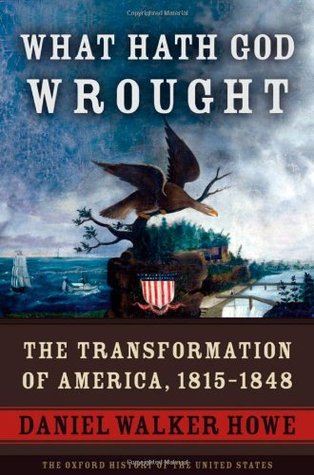
I finished Albion's Seed and now moving on to this:

Image

What can I say? That other put me in a US history mood and Jacksonian era is one of the bigger holes in my US history knowledge. So is shamefully Reconstruction and up until about 1900 but I've got a couple of books I've been meaning to read on that for a long time as well.

It also seemed appropriate because Jackson was the first "Borderer" president per the classification in Albion's Seed so I was curious to see how much the stuff that was laid out in the other book was still obviously true in the mid 1800s.

Albion's Seed did end with a sort of short crash course in US history from 1640 to roughly 1988 which was about when the book was written with the author arguing how his various regional categories were still relevant to internal conflicts throughout. He said more or less what I already said in my last post about the Quakers + Puritans broadly morphing into the North and Borderers + Cavaliers broadly morphing into the South. One of the more interesting things he claims is that the NE is consistently the most aggressively federalist and progressive region and that many of the times the North/South divide was meaningfully bridged was when all the other regions got so fed up with NE reform policies that they banded together to boot them out of power. This strikes me as broadly true though I never really thought of it this way. He also said that a major consistently successful electoral strategy that short circuits the regional conflict is when a party picks an "omnibus" candidate. This means somebody who codes ambiguously as belonging to multiple regions and doesn't express strong opinions on particular regional issues. Most of the successful candidates who were once generals were this type such as Dwight D Eisenhower. I think you could make an argument that Barack Obama fit into this category as well.

Even though the vast bulk of people in the US now do not have English descent anymore, he argues that immigrants have mostly assimilated into regional sensibilities. That article I posted earlier was written by a Bangladeshi immigrant raised in Oregon and he mentions a conversation he had with a Korean immigrant raised in the South and how they had bizarrely picked up beliefs and emotions about the Civil War relative to the particular region they were raised in.

The specific ways these regional differences play out year by year is just too long to write a post about but some of the more specific claims he makes are interesting. He claims that violent crime rates track broadly with how much Borderer+Cavalier descendants a particular area has compared to Puritan+Quaker descent and backs this up with data that was accurate at least as of 1985 or so. I'd be curious to see if this still tracks.

Another sort of interesting thing I did on my own that I thought was a simple test was to see where Bernie Sanders (who is super progressive and vaguely codes Yankee even though he's Jewish) won primaries and if these were mostly in places settled by "Yankees" of New England and Delaware Valley stock and the answer was overwhelmingly yes. He did the best in New England, the upper Midwest, and Cascadia which I've heard described as "extended Yankeedom." Other Democrat strongholds like California which has more mixed stock he didn't do so good in and he notoriously performs terribly in the South. Donald Trump codes as a Borderer candidate, but the outcome in that case in primaries was less clear because he won in most places. The places where Bernie Sanders succeeded are overwhelmingly white states so the ancestry effects are probably more pronounced and easier to pick out. I'd be curious how the data looks if you could screen out everything but the white vote and then filter the white vote by ancestry for Trump. For instance Trump lost the primary in Texas and Ted Cruz won. Is that just because Ted Cruz is Texan or is it possibly because Texas actually has a lot of nonwhite conservatives who are turned off by a Borderer candidate? How did white Texas Borderer stock vote? Since these are "my people" my anecdotal observations are that they overwhelmingly voted for Trump even in the primary and not for Ted Cruz.

Anyway, I think the explanation laid out in this book makes sense on an instinctual level and I've seen enough people doing weird interesting analysis that shows the relevance of this popping up and again and again to think there is something to it. It's less "it explains everything about America" as some people have claimed but more that it definitely identifies a cultural undercurrent that's been powerful enough to consistently impact national politics for 400 years and doesn't real seem like it's going anywhere. It's hardly the only thing or even the most powerful thing that determines outcomes but it's one of the more interesting ones.

*Edit* The book does also cement that there are 2 categories of chronic underdogs that are everybody's whipping boy in US history. One is black people which is pretty much known. The other is the cracker/deplorable/Okie Borderer sect. (No, I am not claiming they have been treated as badly as black people). However, it is absolutely the case that they have been regarded as white trash for 400 years and still are. And since they are mostly Scotch-English border people and Northern Irish you could actually make the argument they've been regarded as white trash for more like 800 years.

*Edit* One more somewhat comical one. The writer of this new book is clearly pro Whig and doesn't much like Andrew Jackson. So on a hunch I looked him up and he's from Utah (Mormonism comes from the Burned-Over District and overwhelming Yankee stock). All his other history books are about Whig history, Victorianism in the US, and Unitarian (literally what the Puritans evolved into) history of Harvard. So, yep, total Puritan Yank, lol.

User avatar
SciFlyBoy
Posts: 2660
Joined: August 8th, 2016, 1:54 pm
Location: somewhere in the Alpha Quadrant
Contact:

Re: Books and Reading

Postby SciFlyBoy » July 30th, 2021, 1:25 am

One great series about US political history from the 1880s through 1910s is Edmond Morris' Theodore Roosevelt series The Rise of Theodore Roosevelt, Theodore Rex and Colonel Roosevelt. In it you get a personal take on the last decades of the Boss era, when political parties were run by non-elected officials who determined who ran and what they stood for, a growing America in a fight for it's own identity and to catch up to the imperialistic Europe, the beginning of the modern presidency and the decade leading up to and through the Great War. These are prize winning books, excellently written and hard to put down.
fancy signature

User avatar
Ragabul
Posts: 679
Joined: January 6th, 2021, 3:27 pm

Re: Books and Reading

Postby Ragabul » July 31st, 2021, 6:38 am

I believe I've heard of that trilogy before and thought I might have even started one before but when I looked it up the book I started was The Bully Pulpit by Doris Kearns Goodwin which was about the friendship turned to rivalry between him and Taft. I didn't finish that book and I don't remember why. I think I picked it up in a hurry from the library as something to listen to on a car trip or something and had to turn it back in before I was done and never bothered to recheck it for whatever reason. He gets best president award pretty easily.

I don't really read biographies too much, but he's definitely one of the people I would be more prone to read one of if I was to read one. Sometimes biographies are one of the better ways to go if you are trying to break into a really complicated subject. I had been reading various things about the Russian Revolution and the Soviet Union a while back and mostly just getting overwhelmed. Then I had the idea to just read a biography of Lenin and it really helped me to make sense of it enough to be able to read meatier books on the topic. Sometimes having a discrete point of view just helps give a filter on the chaos and sheer amount of information. I read one on the Wright Brothers by David McCullough a few years ago which was another whim library pickup that was quite good.

The most recent biography I read was The Fiery Trial by Eric Foner which was about Abraham Lincoln and specifically focused on his views on slavery and how they changed over his life. It definitely made me appreciate Lincoln as a deeply flawed but also deeply admirable dude. It also served as a very interesting look into how thought on the slavery question changed in the 19th century.

I'll definitely keep those Roosevelt ones in mind. The one I was eyeballing for Reconstruction was this one:

Image

User avatar
Vol
Living Ancestor
Posts: 5651
Joined: August 5th, 2016, 5:55 pm

Re: Books and Reading

Postby Vol » August 9th, 2021, 12:28 am

Finished Miracles, at long last. Bathroom reading philosophy is perhaps not the best way to go about it.

In hindsight, it seems more geared for people who aren't me, in that they outright are materialists, or, they believe in miracles, but do not have a developed understanding. I am neither, I never believed they were impossible, but I've had no reason to suspect one has ever happened. The book nudged the needle a little bit in favor, but not enough to categorically change.

In framing _what_ a miracle would be, logically, it makes the concept far more sensible than the simplistic "A metaphysical being (or THE being) violates reality for a moment." He frames the natural as, necessarily, a subset of the supernatural, as is the consistent framework of every peoples' creation stories, our planet and universe emerged from nothing, a primordial chaos, or things of the like. Only modern philosophers contend otherwise. So in that sense, there is no violation, it is a lowering of the higher into its own derivative to insert a non-casual will, which then is immediately entered in the causal flow.

He uses the metaphor of a scribbled black line on a piece of paper. The line is alive, sapient. It's entire life extends from the first spot to the last, and it chooses where it goes on the paper, but is obligated to move forwards. We see its entire life as the single line, beginning to end, where it went, and (for the sake of the metaphor) we're aware of what it prayed to us for as it moved at each point. We do not see it as a point moving through time, only as it's entirety of existence, on the paper. So if it had local peak, and asked us for a red line to accompany it, we could draw a red line parallel for that period. To the sapient line, it would seem as if its wish had been miraculously granted, to us, outside its time and space, we could see the entire life before and after we granted its wish. Nothing has been changed, the line still moves as we always saw it would, but we've inserted ourselves into the line's reality.

I don't completely grasp the implications of that metaphor, because they're all imperfect, and he's implying a great deal that I'm probably not representing well, but it makes for an interesting concept. Lewis later uses this to comment on the efficacy of prayer, how it it's not a matter of making a wish and having the genie grant it, but that you would choose to pray, of your own free will, already known, and the decision whether or not it would be granted, your entire fate, already written into reality. I.e., Because you prayed so fervently for a humble wife, to later meet one in a fortuitous moment was set into motion long before you ever prayed, but it happened because you would. Circular causality or something.

As for specifics miracles, he mostly lost me here, went too deep into the philosophical jungle. If nothing else, he makes a solid case that if any miracles did occur, then the biblical ones would have the best claim to validity, for reasons beyond the volume of people who agree with it. Will probably need to read it a few more times, over my life, to fully understand what he's trying to say. But there are many other books I'd like to read now, and several I've started, so I'll be content with being a tiny bit wiser than I was, a fair bit more confused.

SciFlyBoy wrote:And guess what I started? So far it's my 'break book' that I read in my car between batches at work.

I don't know if a 'pilot' is a real thing. I've never heard of one before, not in any of the Horatio Hornblower series I've watched or Master and Commander.

I hope the accuracy of the Japanese 17th century lifestyle is correct. I know the book was written in the 70's but I hope the writer put historical accuracy into the portrayal of these people.

I love the characters so far. Learning about the Daiymo, Samurai, class structure and the value of being polite. I'm really enjoying Game of Thrones in feudal Japan.

Good man!

Of course. It's psuedo-historical, so real events and people are changed a bit, exaggerated, abbreviated. And yes, maritime pilots are a very real thing.

More or less. I've read critiques that complain that the way he portrays samurai would be equivalent to portrayed knights as feverishly loyal to a chivalric code, an ideal thy claimed to represent more than they actually did, but I don't know the validity of the claim. Who does? I do recall being surprised with the incredible eagerness for them to offer to commit seppuku, but I tend to think, on later readings, that it's meant more as a matter of being ritually polite than actually intending to do so, barring a few times. The setting is accurate, but not realistic, is how I'd think of it.

Yep! Great book! Need to get a new copy at some point, mine's in tatters, because I'm about due to speed run the fun parts again!

User avatar
Ragabul
Posts: 679
Joined: January 6th, 2021, 3:27 pm

Re: Books and Reading

Postby Ragabul » August 9th, 2021, 2:29 am

I just finished What Hath God Wrought and I give it like 7 out of 10 or so. This guy is clearly moving heavily to correct what he feels is a tendency of past writers to heap too much praise on Andrew Jackson and to not give enough credit to John Quincy Adams and the Whigs. This is fine but if you are mostly just interested in learning about the period, you really have to work overtime to get through his framing which tends to be "here is why everything Andrew Jackson did was wrongheaded and why it would have been better if everybody listened to John Quincy Adams instead." I would not really say it's appropriate for the Oxford History of the United States series which is supposed to be a non textbook but comprehensive narrative history of the US approachable by people who aren't professional historians. It's especially the case because this writer was commissioned to write this book for this series after the first guy who was commissioned to write a book returned a volume that was basically a pro-Jackson pure Marxist critique of why capitalism ruined everything in this period. That was rejected as not appropriate for the series. This new new guy is simultaneously trying to prove how everything that other guy wrote is wrong and also why Andrew Jackson sucks on a separate framework that has next to nothing to do with that while also writing a general history. He's trying to keep too many balls in the air and he just mostly isn't doing it.

He has some really strong moments. In particular he does a really good job of giving a comprehensive but succinct account of the Mexican American War. He does his absolute best when he's writing about religious and intellectual history, which is what I think his other books are about.

The place I work has sent everybody home again because of Delta and while I personally think this is something of an overreaction I am shedding 0 tears about working from home. I doubt I'll be at home again as much as last year. Last year I used my at home time to play a whole bunch of ginormous RPGs. This time I think I will use it to read some ginormous door stopper books I have had laying around for years and haven't gotten to yet. I think I'm gonna do Democracy in America by Alexis de Tocqueville next because it's still Jacksonian stuff and maybe will provide a counterbalance to some of the issues with this other book.

@ Vol on Miracles

What he is talking about sounds like natural law he is dumbing down for non Christians or what Protestants would call Providence. This was the prevailing attitude among pretty much all European intellectuals until the later half of the 19th century or so. It is basically the argument that since God created everything, his existence and plans are made manifest in everything. Hence there is no contradiction between "the book of law" (the Bible) and "the book of nature" and that one may look equally for divine truths in both. Providence refers both to miracles as we would understand them but also to signs made manifest in mundane reality that things are proceeding according to God's plan. This is why when you read old speeches by US presidents and founders and whatnot they will constantly say "Providence this" and "Providence that." They are explicitly framing various events as being evidence of Providence, that is God's plan for everything made manifest in particular events. "We won the Revolution because of Providence because we are meant to be a New Jerusalem of liberty." Or "The Union has been shattered by Providence because we failed to expunge the sin of slavery." I would dig up some actual quotes like this but I'm feeling lazy.

So you are correct that the old view of miracles was not "some supernatural something or over breaks the rules every once in a while." It was that everything was inextricably woven up with the divine and the divine was discernible in things moderns would consider utterly mundane.

*Edit* A silly example: That last book I read was talking about the origins of Mormonism. At one point, Joseph Smith decides he has received divine inspiration that "saints" should abstain from alcohol, tobacco, and hot drinks because his wife chastises him for spitting tobacco juice on the floor. Utterly mundane by our standards. To him a sign of Providence.

User avatar
Vol
Living Ancestor
Posts: 5651
Joined: August 5th, 2016, 5:55 pm

Re: Books and Reading

Postby Vol » August 11th, 2021, 11:05 pm

"YHWH Hath Wrought What," would have been a much more mildly amusing title.

"pro-Jackson pure Marxist critique "

Didn't Jackson proudly kill the first attempt at centralized banking?

Reminds of "The Generalissimo," a biography of Chiang Kai-shek. Which was a joy to read nearly in its entirety during a layover. But it obviously gave a sympathetic, nuanced take on the man and his actions, acknowledging his flaws as a great man of history, so badly treated by his contemporaries.

Then in Wild Swans, a book I will shill at any given chance, it makes note that the Nationalist forces were so corrupt, the generals in charge of the defense of the city in question had sold the concrete needed to build static defenses on the black market. For sure, forging a united national identity from people perpetually conquered by foreigners, and currently by warlords, is a trick, much less when commies are starting a civil war and the US is muzzling you. That said, when your forces are so corrupt they'd actively sell their own means of not being murdered, you've fucked up.

People who write about other people tend to have biases, news at 11.

@Miracles: Ah. I knew the term (fate), but didn't know the etymology. He seems to flirt with a kind of determinism in explaining it throughout, but doesn't commit. Hence the squiggly line metaphor. I think having that kind of humility, whether or not it's true, might be better than personal glory, at least in preventing rational atrocities. Or maybe not. Difficult to get into the headspace of someone who believes anything they do is ordained, but I suspect Providence was probably not being meant entirely literally.

I'm find of the story of Muhammad issuing a decree that Allah said his friends should show up to dinner parties exactly on time, then leave promptly without making small talk. Also no marrying his wives after he dies.

Putting a few seconds of thought into it, Providence, if limited to the scope of banal events, would work well with the Corn King concept. These extremely common, intuitive concepts, that are so vital to human experience. Pissing off your wife can mean only so much. So to apply Lewis' modified trilemma to Joseph Smith; lunatic, liar, or prophet?

User avatar
Ragabul
Posts: 679
Joined: January 6th, 2021, 3:27 pm

Re: Books and Reading

Postby Ragabul » August 12th, 2021, 7:07 pm

Dark put me in a mood for sci-fi which made it hard for me to go back to nonfiction books so I detoured with a short sci-fi book and that seemed to scratch the itch enough for me to go back to nonfiction again.

Read this:

Image

It's pretty much a popcorn book but a pretty enjoyable one. It's obviously written with Starship Troopers as a model. I actually liked it better than Starship Troopers which I found kind of dry and boring compared to the other Heinlein books I've read. The basic premise is that humans must fight a never-ending series of campaigns with various alien species because the universe is such a competitive eat or be eaten place. The Colonial Defense Force gets recruits by offering really old people regenerative medicine that is impossible to get anywhere else in return for X years of service. Thus the troops are all 70+ years old, which makes for an interesting dynamic.

I wouldn't really call it profound but it's an easy read and doesn't just focus on nothing but 20 page long descriptions of ship parts and guns which the more boring varieties of military sci-fi tends to do.

User avatar
NCLanceman
Posts: 297
Joined: August 5th, 2016, 6:15 pm

Re: Books and Reading

Postby NCLanceman » August 12th, 2021, 9:53 pm

Ragabul wrote:Read this:
-Scalzi snip-

It's pretty much a popcorn book but a pretty enjoyable one. It's obviously written with Starship Troopers as a model. I actually liked it better than Starship Troopers which I found kind of dry and boring compared to the other Heinlein books I've read. The basic premise is that humans must fight a never-ending series of campaigns with various alien species because the universe is such a competitive eat or be eaten place. The Colonial Defense Force gets recruits by offering really old people regenerative medicine that is impossible to get anywhere else in return for X years of service. Thus the troops are all 70+ years old, which makes for an interesting dynamic.


That actually sounds a lot more like The Forever War by Joe Haldeman. It's kinda written as a very specific "Fuck you" to Robert Heinlein for Starship Troopers -Heinlein heartily endorsed the book, because if there's nothing else Starship Troopers did, it empathized with the infantryman, where ever he was- as much as it was a very obvious Vietnam War allegory. Thanks to the magic of relativistic time dialation, when humanity gets into a war with the aliens and sends soldiers off to the front, by the time they get back decades or centuries have passed. The world they fought for has changed so incredibly that they're aliens at home themselves. So much so that they only feel at "home" in the Army. An Army that's currently plotting their war on terms of centuries and is counting victories in kills rather than ground conquered or political considerations.

In case you didn't notice, America did not treat it's Vietnam veterans very well until it was far too late.

As for books I've actually read, I quite liked the Orphanage series by Robert Buettner:

Image

A friend of mine read it and described it as "what he thought Starship Troopers was going to be when he first picked it up". High praise, really! It's very much a story about war, the soldiers in it, and being in the Army, clearly written by a man who was actually in the Army. It also does well as an incredible adventure story! As the series went on and ended, the biggest delight I thought was how the main character Jason Wander was written. In the first book he's an eighteen year old draftee in the US Army. In the last book, he's a general pushing sixty, and both his thoughts, actions, and reflections show that rather well.

Ragabul wrote:I wouldn't really call it profound but it's an easy read and doesn't just focus on nothing but 20 page long descriptions of ship parts and guns which the more boring varieties of military sci-fi tends to do.


I remember watching a video from a sci-fi convention, where someone is going over the plan and disposition of the Navy for the purpose of getting burgeoning science fiction writers to consider how their Space Navies work. One of the authors on the panel got onto a sidetrack about how he didn't read a lot of military science fiction. He tried back in the day, but every book was inevitably about the adventures of a grubby infantry squad humping a ruck on Planet Vietnam. Sometime before the panel he went to a bookstore and looked again. And wouldn't you know it? The first book he picked up was the adventures of a grubby infantry squad humping a ruck on Planet Afghanistan.

User avatar
Ragabul
Posts: 679
Joined: January 6th, 2021, 3:27 pm

Re: Books and Reading

Postby Ragabul » August 13th, 2021, 1:14 am

The thing that turned me off of most military sci-fi was trying to read On Basilisk Station which is the first book in the Honor Harrington series. It would have like 5 minutes (I mostly do audiobooks) of character and plot information and then 10 minutes of exceedingly detailed information about how the ship was just retrofitted or how the shields worked or whatever. The character and plot stuff would go on just long enough for me to get interested and then I'd have to slog through a tech manual to get more content I actually cared about. The thing that finally did me in was a 20ish minute long sequence describing how the ship *docked.* Not how it fought or how its weapons worked even. How the damn thing docked! I was just done.

I am not opposed to war stories and while I get why somebody might nerd out on the excruciating minutia of the tools of war, that somebody is not me. I can deal better when it's historical stuff because ancient, medieval, and even early modern warfare has more interest to me in that mechanical sense. That Saxon Stories series by Bernard Cornwell I mentioned before is like this. A huge chunk of that is very detailed accounts of 9th century warfare.

The Forever War is another one on my list actually.

User avatar
Alienmorph
Posts: 6022
Joined: August 9th, 2016, 4:58 am

Re: Books and Reading

Postby Alienmorph » August 13th, 2021, 10:16 am

Oky, more classic books cleared:

The Invisible Man (plus other tales) - So far the least bleak Wells things I've read. It was kind of humorous in places, really. The way the titular Invisible Man was pretty much a sociopath who would have been terrible at acting incospicuously even if not completely transparent got a few chuckles out of me. Other shorter tales included were interesting too, but nothing too remarkable;

The Fall of House Hushers (and other tales) - This one collected all very slow and more surreal stuff Poe wrote, and it was kind of a chore to get through. Didn't notice the man had such a thing for pun-y names tho, the first time I've read these backwhen. But my knowledge of English wasn't that good at the times, I guess;

The Picture of Dorian Grey - So far the one piece I've liked the least of all this collection. Half of it is just the hedonistic asshole that pushes Dorian down the wrong path pontificating about everything, and I'm still not sure if it's meant to be irritating or if it was just Wylde stroking his own ego every couple pages, especially since said character is the only one that doesn't get any comuppance at the end. When it does focus on Dorian Grey, his inner struggling and his fall from grace tho, it is alot more intriguing;

At the Mountains of Madness (plus The Shadow out of Time and The Color From Space) - Yeah... loved these ones when I've first read them, and I still do now. Lovecraft may not have been the nicest guy, but he's one of the best example of the "you must be able to separate the art from the artist" argument I can think of. Look forward to revisit his other tales collected in other books in this series;

The Scarlet Plague (and other tales) - The big surprise of this bunch. Of course I knew how much of a capable writer Jack London is, but this was just a very fun collection of short stories to get through, even tho putting on the cover the one about the deadly plague that kills 99.9% of humanity and tosses the few survivors back to the stone age miiiight have been in poor tastes in the current year;

The Phantom of the Opera - A fine example of a poorly executed good idea. No wonder the character became an horror icon, but the novel it all started with is very watered down. It stops the main plot multiple times just to digress about stuff that has very little meaning to the overall story, and pulls out of its butt in the final act a character that has been mentioned only a couple times, but that conveniently knows the Phantom and everything about him, and ends up being the key to hunt him down. At least writing-wise it wasn't bad, but it felt... structurally lacking, I guess you could say?

So yeah... a few hit-and-misses, but I'm still glad I'm going on this trip. Next in line is The Last Man, which is the chunkiest book so far in the collection.

User avatar
Ragabul
Posts: 679
Joined: January 6th, 2021, 3:27 pm

Re: Books and Reading

Postby Ragabul » August 13th, 2021, 8:20 pm

Vol wrote:Didn't Jackson proudly kill the first attempt at centralized banking?


Yes because he hated paper currency, loans, and debt and wanted everything to be based on hard currency. He was not anti-capitalist but he did have some "defending the little guy against the giant guys" sensibilities and he super played this up in campaigning. So the Marxist critique wasn't framing it as industrial proletariat vs capitalists but more as backwoods farmers vs industrialization which would turn them into "wage slaves." I said "pure Marxist" but that's a bit of hyperbole on my part. It was using a very class based mostly anti-capitalist framework though. Andrew Jackson was not a proto-Marxist. He was a largely opportunistic populist with at least some genuine populist sentiments.

So to apply Lewis' modified trilemma to Joseph Smith; lunatic, liar, or prophet?


The trilemma actually ironically works for Smith but for Jesus it leaves off a 4th entirely possible thing: that Jesus never said he was the Son of God at all and this is mostly an invention of his apostles after his death. It's impossible to answer this question because our closest historical accounts are from decades after his death. Smith meanwhile we have plenty of contemporaneous accounts of. For Smith, I'm actually inclined to believe he believed it. Prophets were a dime a dozen in those days. There were weird little utopian groups popping up everywhere. Oneida. Millerites. Shakers.

There was actually a form of established church in much of the NE up until the 1800s and these were formally all dropped by 1830 or so. This was probably fuel on the fire of the Second Great Awakening, where there was a fit of religious experimentation. It usually gets talked about mostly as an American thing but it was actually a global phenomenon so I doubt it was just the dropping of institutional churches but I bet that accelerated it.

@classic books

The Color Out of Space is probably my favorite Lovecraft story. I am a relative heathen in that Lovecraft just doesn't do much for me. He's really wordy even for the time and I've never found cosmic horror particularly scary or even that interesting. I get creeped out best by traditional supernatural horror having to do with ghosts and such.

Poe is more to my taste. I like both his poetry and his short stories. He's known for horror but he also wrote some weird pirate adventure stories and he more or less invented the detective genre with stuff like the Purloined Letter. My personal favorite Poe story is The Masque of the Red Death.

I've read two Jack London novels, White Fang and the Call of the Wild, as a kid and loved them both. I enjoy these less now but my favorite type of book as a kid were books written from the POV of non anthropomorphized animals. Watership Down remains one of my absolute favorite books period but I also loved Black Beauty and Tailchaser's Song and similar things.

User avatar
Alienmorph
Posts: 6022
Joined: August 9th, 2016, 4:58 am

Re: Books and Reading

Postby Alienmorph » August 14th, 2021, 3:45 am

Ragabul wrote:@classic books

The Color Out of Space is probably my favorite Lovecraft story. I am a relative heathen in that Lovecraft just doesn't do much for me. He's really wordy even for the time and I've never found cosmic horror particularly scary or even that interesting. I get creeped out best by traditional supernatural horror having to do with ghosts and such.

Poe is more to my taste. I like both his poetry and his short stories. He's known for horror but he also wrote some weird pirate adventure stories and he more or less invented the detective genre with stuff like the Purloined Letter. My personal favorite Poe story is The Masque of the Red Death.

I've read two Jack London novels, White Fang and the Call of the Wild, as a kid and loved them both. I enjoy these less now but my favorite type of book as a kid were books written from the POV of non anthropomorphized animals. Watership Down remains one of my absolute favorite books period but I also loved Black Beauty and Tailchaser's Song and similar things.


Lovecraft's writing can be too wordy, yes. His pre-Mythos stories especially suffer from it. The thing that keeps me a fan is the imagination, really. I don't get spooked by novels easily, but I do really appreciate how much alien his aliens and eldritch monsters actually are.

I do like Poe quite a bit too, I just went through a streak of some of his lesser works, but I do still enjoy most of his stuff. My favorite tales of his are probably The Casket of Amontillado and the Gordon Pym's short novel.

Yeah, those are the two London's pieces of work everyone knows, but turns out he wrote a whole lot of shorter stories and I've had quite some fun reading those, too.

User avatar
SciFlyBoy
Posts: 2660
Joined: August 8th, 2016, 1:54 pm
Location: somewhere in the Alpha Quadrant
Contact:

Re: Books and Reading

Postby SciFlyBoy » August 15th, 2021, 8:26 pm

I thought it would be interesting to pick up a work written by an emperor who might never have thought that someone would actually read what he wrote 2000 years later. I can't wait to dive into this. Meditations by Marcus Aurelius.

And keeping in great works written by great leaders I also picked up The Complete Personal Memoirs by Ulysses S. Grant.
fancy signature

User avatar
Ragabul
Posts: 679
Joined: January 6th, 2021, 3:27 pm

Re: Books and Reading

Postby Ragabul » August 16th, 2021, 5:01 am

Finished Volume 1 of Democracy in America which is the slightly longer volume. This book is less deeply thought provoking (because most the ideas in it are things which a citizen of a democracy has probably already heard in public school civics and history classes) and more interesting for historical novelty reasons. Principle among these for me is the degree of spooky accuracy this guy has when he makes predictions about the future. Some of these include:

the Americans and the Russians are quickly becoming the most powerful peoples on the globe and seem destined to dominate it (he stops short of saying they will be in conflict)
the Americans will eventually dominate the seas and supplant the British as the major maritime power
if a country once attains democracy and then falls into something like absolute monarchy it will be considerably more despotic and horrible than monarchy was (fascism, much?)
if the Union dissolves it will probably be because of the Southern states (granted many people thought this at the time so less spooky precognition points are merited)
the only way democracy can succeed in continental Europe without constant war is if pretty much every country in Europe becomes a democracy

There's all kinds of other interesting claims he makes that are probably more suited to the politics thread (including that democracy is the most expensive form of government and that American laws are actually fairly bad and most of the success of the Republic comes down to customs and culture peculiar to them).

For clarification if it's not known or clear, this was written around 1830 by a French aristocrat who was sent over by the government of France to investigate American prisons (which were some of the more progressive in the world at the time) and write a report about them. He spent a year or so wandering around the country talking to people and then published a 2 volume book on his observations about the sociopolitics of the US once he got back to France.

User avatar
Ragabul
Posts: 679
Joined: January 6th, 2021, 3:27 pm

Re: Books and Reading

Postby Ragabul » August 18th, 2021, 4:50 am

I finished Democracy in America and I have to say I'm somewhat surprised how much I ended up enjoying it. I expected to be able to get through it in a sort of "doing my homework" way but outside a couple of rough spots it was consistently interesting and held my attention. The rough spots amounted to about 25% of the book and unfortunately one of them was right at the beginning. He goes into a very long description of how the US government system works on the assumption his French readers have no idea. This is mostly really dull because again it's stuff you already got from junior high level civics class. He did explain how our confusion of local governments work (where the powers of the municipality leave off and where those of the county begin) in a way that made this somewhat clearer to me. Dunno how I feel about understanding my own government slightly better because a 150 years dead Frenchman explains it to me, lol. The other rough part was in the second volume where he does a multi chapter comparison on the differences between various high arts in aristocracies vs democracies. He does a separate chapter for poetry, one for drama, etc. making pretty much the same point about each (that high art tends to degrade and art becomes more fantastical and sensationalistic in democracies) and there's not a clear need for a new chapter for each one.

He reads sort of like a paleoconservative but that's probably just a product of how old this is. He apparently chose to sit in the center left in the French assembly and that seems about right for the time period. He wrote a similar book about the French Revolution and the Ancient Regime, which is unfortunately not on audiobook. I want to read it but it's really hard for me to get through print books anymore as I've said. French Revolution is another place where I am inexcusably and profoundly ignorant. I read Vol 1 of this translated work by a guy named Georges Lefebvre some years back but it was a slog. This guy is apparently somewhat known for being a wooden writer and the fact it was a translation made it even worse. I remember pretty much nothing from that reading.

I do have some thoughts but they are probably more appropriate for the politics thread so I may post something more substantive on contents later. Roughly he has a distinctive understanding of what "freedom" vs "equality" means. He believes that freedom is a good thing but that the true energy of democracies is that they try to equalize conditions between people and eradicate all ranks or orders. By doing so they end up transferring all power into an increasingly centralized authority that represents the majority of the people because the majority of the people is the only thing an individual can bear to have over him. The will of the majority thus becomes a kind of totalizing power that people will bend themselves to conform to because of the opprobrium they receive if they do not. He believed this impulse towards equality was an irresistible product of the age and thus a waste of time to trying to undo. However, he was very concerned about these implications of the "tyranny of the majority" not just on the standard grounds of minority rights being trampled on but that it would ultimately produce slavish, compliant human beings who did not stand up for themselves and thus were no longer "free" but only "equal." A huge part of the book deals with this theme and various strategies he proposes for how to deal with it.

I already mentioned he had some creepy precognition stuff going on and another place he does this was identifying that the conflict between capitalist overlords and industrial workers (workers in manufactures as he puts it) would likely become more and more acute and that the industrial tycoon class were the most natural place a new aristocracy might arise. (I also learned that the old timey word for a trade union was a "combination." I think I'll start using it just to sound more pretentious).

I'm specifically trying to not buy books or audiobooks during my "attack the door stoppers you already own" campaign so old public domain stuff is a natural candidate for this. These are usually available for free somewhere. Other door stoppers include various old epics, The Federalist and Anti-Federalist papers, writings by Martin Luther and St. Augustine, the Divine Comedy, and the Canterbury Tales. I'm leaning Federalist Papers to continue the USA political theme but we'll see.

User avatar
Ragabul
Posts: 679
Joined: January 6th, 2021, 3:27 pm

Re: Books and Reading

Postby Ragabul » August 26th, 2021, 8:01 pm

Gonna post a book I read a long time ago mostly because of my current mood.

Storm models are currently tracking New Orleans possibly getting slammed and then we have maybe once again dodged a bullet. This is peak hurricane season and the Gulf is plenty hot. These ones that piddlefart around Mexico and then bank north and head across the Gulf are especially bad. Mexico keeps them from forming up so people don't pay attention. But the Gulf is just small enough they get here from Mexico in like 2 days and also just big enough that they can go from a tropical storm to a Cat 4 in 2 days as well.

They usually also do not know precisely where the eyewall will hit until roughly 24 hours before landfall. The eyewall is what will destroy you. We are like only 75 miles or so from where the eyewall of that Cat 4 killer that hit Louisiana last year came ashore. It left basically no human structure south of Lake Charles standing and we got 2 inches of rain and a brisk wind. They were still quibbling about exactly where within a 100ish mile range that eyewall would be mere hours before it came ashore. If you wait until 24 hours before landfall to leave Houston you will not be able to leave. 6 million people cannot just up and relocate in 24 hours. Last time this was tried during Rita (which if I recall is still the biggest mass evacuation in US history) more people died in the evacuation than a hurricane typically kills and it ended up not being a direct hit.

Hurricane forecasting seems like it is super accurate but it is not. I did not grow up on the coast and had no particular fear of hurricanes (I had plenty for tornadoes though!), but since moving here I have developed an almost quasi religious awe at the power of these things. It's not "fear" per se but it's like how I imagine living in the shadow of a volcano must feel. Like there is this tempestuous unpredictable pagan god that could destroy everything in a moment if you don't sacrifice enough virgins. I'm caught somewhere between fear everything I have will be blown away and an intense desire to stand on the beach and watch it come in.

Anyway, if you want to know what it feels like to be standing somewhere when the god of the sea comes ashore I recommend:

Image

This is a pop history books that reads like a thriller. I know lots of people who pretty much read nothing but fiction who enjoyed it. It is about the 1900 Galveston hurricane which killed around 6000-10000 people and remains the worst natural disaster in US history.

User avatar
Vol
Living Ancestor
Posts: 5651
Joined: August 5th, 2016, 5:55 pm

Re: Books and Reading

Postby Vol » August 26th, 2021, 11:00 pm

Ragabul wrote:The trilemma actually ironically works for Smith but for Jesus it leaves off a 4th entirely possible thing: that Jesus never said he was the Son of God at all and this is mostly an invention of his apostles after his death. It's impossible to answer this question because our closest historical accounts are from decades after his death. Smith meanwhile we have plenty of contemporaneous accounts of. For Smith, I'm actually inclined to believe he believed it. Prophets were a dime a dozen in those days. There were weird little utopian groups popping up everywhere. Oneida. Millerites. Shakers.

I imagine in Smith's case, and others, they did genuinely believe they had received some kind of revelation, and took to with genuine confidence and gusto, but that matters grew well beyond what they were equipped to handle. A cult Peter Principle. The lunatic requires just enough lucidity to convince the relatively sane (I watched a lecture on the Jehovah Witnesses yesterday, they're a bit of both). I don't care to read Mormon works, but I'm sure he oldest extant texts are probably lucid and internally consistent, if not penned by him.

Though if you or I hypothetically did receive some divine revelation that must be spread, or truly believed we did, ending up shot by an angry mob is probably better than we could manage. I lack an Aaron to my Moses, and only the Catholics would listen to you.

The issue with any one silver bullet "fourth option," or specific rebuttals of specific incidents, is the follow-through. Yes, that's a reasonable explanation, and now you must also answer for a dozen logical problems that arise, then a dozen for each new explanation, and so on. You can answer the trilemma with the wild card, "legend," and then need to account for all the pieces necessary for a bunch of Second Temple Jews to invent such a story about a man they actually knew. Then are they liars, lunatics, or Lord-adjacent? In Islamic apologetics, that's one of their big rhetorical points, incidentally, that Jesus never specifically said he was God in those exact words. I'm inclined to think that, much like Smith, all the people involved genuinely (as much as any of us can be) believed in what they preached, and any misconceptions that might have occurred were during the physical life of the man.

On a related note, got "On Fairy-stories," an essay by Tolkein, with some additional material, on how he came to write the seminal fantasy western fiction. His and Lewis' "meta-narrative" theory has been sticking in my mind lately, and they were surely qualified to make that comment, so I want to look deeper into Tolkein's creative philosophy. Funnily enough, reading a random page from the middle, he makes note of the categorical problem of fantasy created for children versus adults, which the Japanese overcame with shonen and seinen.

SciFlyBoy wrote:I thought it would be interesting to pick up a work written by an emperor who might never have thought that someone would actually read what he wrote 2000 years later. I can't wait to dive into this. Meditations by Marcus Aurelius.

And keeping in great works written by great leaders I also picked up The Complete Personal Memoirs by Ulysses S. Grant.

The downside I've found to reading the personal musings of great men is that it firmly cements the reality that I'm not a great man, nor can will myself to be one.

Alienmorph wrote:Lovecraft's writing can be too wordy, yes. His pre-Mythos stories especially suffer from it. The thing that keeps me a fan is the imagination, really. I don't get spooked by novels easily, but I do really appreciate how much alien his aliens and eldritch monsters actually are.

Do you read his work in English or Italian? I've heard, repeatedly, that English is a blunt language, so a faithful, but artful, translation might be objectively even better.

User avatar
SciFlyBoy
Posts: 2660
Joined: August 8th, 2016, 1:54 pm
Location: somewhere in the Alpha Quadrant
Contact:

Re: Books and Reading

Postby SciFlyBoy » August 27th, 2021, 1:19 am

Vol wrote:The downside I've found to reading the personal musings of great men is that it firmly cements the reality that I'm not a great man, nor can will myself to be one.

Hey, at one point these men were told to read the musings of great men too.
fancy signature

User avatar
Ragabul
Posts: 679
Joined: January 6th, 2021, 3:27 pm

Re: Books and Reading

Postby Ragabul » August 27th, 2021, 2:55 am

@ trilemma

I think it matters if you are addressing historical figure Jesus or mythological entity Jesus and/or if you believe those are exactly the same thing or maybe are not. Lewis is correct that mythological Jesus is not leaving you any choice but to confront him on these terms. But "is mythological Jesus correct as presented or is he more like King Arthur" is a question that precedes "what does the presence of mythology Jesus demand from me?" much as "Does God itself" must proceed "what does it mean if God exists?" And these always end up coming down to the indefinable highly idiosyncratic of what I keep calling gnosis (not quite in the way the gnostics meant it). Either there is sufficient evidence to convince you that mythological Jesus is really a thing as he presents himself or there is not.

It's related to why Pascal's Wager is meaningless to convinced atheists. Threatening people with consequences in the afterlife is meaningless if you genuinely do not believe there is an afterlife. It narrowly works inasmuch as it is not possible to proceed without some form of answer to it. Shrugging your shoulders and going about your day is an affirmation that you are not sufficiently convinced to mend your ways. The trilemma does not work as intended if you believe that version of Jesus is itself a construct. So, sure, shrugging your shoulders in this case because you think mythology Jesus is a construct happens to map exactly on to what you would do if Jesus was the same as the guy who called himself a poached egg, but I don't really think this is what Lewis intended. He had had a profound conversion experience. For him there was no question that there was no distinction between mythology Jesus and historical Jesus.

I think I posted On Fairy Stories earlier in the thread somewhere. That's a brilliant essay. It has my favorite quote. "I desired dragons with a profound desire." One of the better descriptions of the numinous feeling I've encountered. It's actually the only nonfiction of Tolkien's I've read. I really should read some more at some point.

If you are really getting into Lewis/Tolkein stuff, I also recommend the Space Trilogy by C. S. Lewis. It is basically the Chronicles of Narnia for grownups.

Image Image Image

Always struck me as funny that Phillip Pullman wrote His Dark Materials as a counter to the Chronicles when this trilogy existed. These are much, much more "Sinners in the Hands of an Angry God" than the Chronicles ever were.

@ great men stuff

I have a whole WOT that's related to this because I have had a somewhat meaningful shift in how I think about how history is written in the last, I dunno, 6 months, that has some to do with essays I've read and some to do with me having been reading a bunch of "original works" recently and not derived works written by modern historians. I'm still making my way through the Federalist Papers (slowly) so I'll leave off until I'm done with that.

User avatar
SciFlyBoy
Posts: 2660
Joined: August 8th, 2016, 1:54 pm
Location: somewhere in the Alpha Quadrant
Contact:

Re: Books and Reading

Postby SciFlyBoy » August 27th, 2021, 1:59 pm

I finished the Mexican-American war section in Grant's book. He called it the U.S.- Mexican war and told the truth about how he felt going into it, out of it and the results of it. He said it was purely a political war.

I was always told growing up that Zachary Taylor won the presidency only because he killed a bunch of Mexicans, but now that I'm reading about it from someone who fought in it WITH the guy I can see that you have a general who is smart, fast, fights clean and knows how to do his job very well. And when you put him up against an army that is vastly superior to his in numbers and he wins and wins and wins then it becomes clearer that people who wanted to beat the current administration wanted to with someone who was widely popular and gets people very excited. Taylor was very low key when it came to politics and the party swiftly nominated him and won and he had to accept it.

That war produced 4 presidential hopefuls, 3 of which won. Not including Jefferson Davis, who was Taylor's son in law.
fancy signature

User avatar
Alienmorph
Posts: 6022
Joined: August 9th, 2016, 4:58 am

Re: Books and Reading

Postby Alienmorph » September 4th, 2021, 6:38 am

Wasn't sure where to put this, but...

Image

Andy Serkis is doing a full audiobook of the Lord of the Rings trilogy, Fellowship of the Ring is already on preorder on Audible. Fucking niiiiice.

User avatar
Alienmorph
Posts: 6022
Joined: August 9th, 2016, 4:58 am

Re: Books and Reading

Postby Alienmorph » September 5th, 2021, 2:46 pm

Vol wrote:
Alienmorph wrote:Lovecraft's writing can be too wordy, yes. His pre-Mythos stories especially suffer from it. The thing that keeps me a fan is the imagination, really. I don't get spooked by novels easily, but I do really appreciate how much alien his aliens and eldritch monsters actually are.

Do you read his work in English or Italian? I've heard, repeatedly, that English is a blunt language, so a faithful, but artful, translation might be objectively even better.


Italian. He's famous enough that I've never had the need to seek out an edition in another language. All I can say is that his "oniric period stuff" were a damn chore to sit through, but when I first got to the Old Gods and cosmic horror stuff I was absolutely captivated.

User avatar
Ragabul
Posts: 679
Joined: January 6th, 2021, 3:27 pm

Re: Books and Reading

Postby Ragabul » September 9th, 2021, 4:49 pm

I finally finished the Federalist Papers and another related book I have called The Anti-Federalist Papers and the Constitutional Convention Debate. As it turns out, while the Federalist Papers are a list of official papers written by Alexander Hamilton, James Madison, and John Jay, there is no official canon of the Anti-Federalist Papers per se. The full "canon" of anything and everything that could get called Anti-Federalist Papers spans 7 volumes or so apparently. Needless to say, unless you are some kind of professional historian or constitutional lawyer or something, there is no need to read all that. The book I have is one I bought years ago and I'm pretty sure it's just whatever popped up in Amazon first when I searched for this. It consists of a big chunk of James Madison's notes taken during the Constitutional Convention covering arguments and debates over various proposals for the constitution, a bunch of essays printed in newspapers in direct challenge to the official Federalist Papers or otherwise urging people not to vote to ratify, and speeches against ratification issued by various anti-federalists during state legislative sessions debating adoption of the new constitution.

Again, no sweeping takeaways or anything particularly earthshaking here. Both were also surprisingly readable though considerably drier than Democracy in America. Some things that did leave an overall impression:

These guys really were in uncharted waters. They were casting around everywhere for precedent looking at confederations and proto-democracies in ancient Greece, the Swiss cantons, the German States, the Dutch states, Rome, the government of Britain, and in theoretical writers like Montesquieu. There were many times where their argument for or against something was something like "we know confederations don't work in states with huge territories because Montesquieu wrote that they don't" or "we can't give this power to the president because ancient Greek despot X managed to usurp the power of this particular confederation." This is not to say they were ignorant and guessing but it's hard to say the constitution is based on any of these in particular (other than Montesquieu). They mostly looked at these (and the Article of Confederation) as examples of what not to do and more or less completely made up measures they thought would prevent those problems from occurring.

Far from really beating the "city on a hill" drum, most of these guys were singularly obsessed with the fallibility of man. They constantly talk about how appeals to some kind of special American character just won't cut it and there is 0 reason to suspect the USA is particularly immune to despotism and thus the government needs real safeguards against usurpation. In as much as they talk about "city on a hill," it's much more in the vein of "we have this singular chance to build something new and lasting here and we must be exceedingly careful not to squander this chance or fuck it up." If only this attitude had maintained as the dominant strain of American exceptionalism (you can see vestiges of it in the Gettysburg Address even), I think the country and the world would be much better off.

James Madison has been slowly growing on me over the last few years but this just increases my respect for him even more. He definitely deserves the award of "most boring founding father you know nothing about who is utterly indispensable in everything working out in the end." He is the archetype of the patient, steady, and mostly unassuming individual gnawing on the problem in the relative background until the problem is solved. I know I said I don't really read biographies but I may pick up a biography of him at some point.

If I can be spared some "Murica" chest beating, this group of guys is just...somewhat phenomenal. There's a lot of mythologizing of them that turns them into demigods or whatever which is obviously false, but it really is extremely lucky or providential or just bizarrely interesting or whatever you want to call it, that this backwater former colony country happened to get this batch of extremely intelligent, extremely ambitious, extremely persistent guys who were nonetheless deeply committed to compromise, integrity, and doggedly making something better and functional. This is hardly the only time in history when a cabal of comparatively extraordinary people had an outsize influence on major events but it's certainly in the minority of cases where you can read about them and come away overall with more admiration than disgust.

Anyway, that's two more door stoppers I already owned knocked out. I think I have to go back in about 2 weeks. Should be enough time to do at least one more given how often I get distracted by stupid time wasting things. Next up is the Confessions of St. Augustine.

User avatar
Vol
Living Ancestor
Posts: 5651
Joined: August 5th, 2016, 5:55 pm

Re: Books and Reading

Postby Vol » September 13th, 2021, 11:52 pm

"Someone wrote a book called For the Loves of Triangles; I have not read it, but anyone who loves triangles probably loves them for being triangular."

That's a quote.

@Sci: I'm coming back around to Great Man Theory, in fact. Certainly, some of them are purely the products of their environment and chance, but some are clearly men who would end up defining the times no matter where they landed to start. And given all of humanity is one, weird narrative, it makes for a far more compelling story than "the masses plodded along, and popped out a guy who did a thing because of various socioeconomic factors, then the masses plodded along."

@Raga: That is both very interesting, and deeply depressing. In lieu of trying to explain to a kid why the Founders were so exceptional, giving them a little mythological edge is fine. I'm always partial to Washington for his Cincinnatus moment, both of them. Having that kind of integrity when real alternatives, however solid they may have been, has to be extraordinary. America held up remarkably well given the novelty. Given they couldn't see the future (Teas leaves/oracles/prophets are a whole other story), that their safeguards still kinda function is worth noting in future history books.

User avatar
Ragabul
Posts: 679
Joined: January 6th, 2021, 3:27 pm

Re: Books and Reading

Postby Ragabul » September 14th, 2021, 1:26 am

I wax and wane on great man theory. It's like the nature/nurture question. They are so intertwined together that talking about them separately doesn't even make sense on some level. Is there a Third Reich without Hitler? Probably not. Had Hitler been born a Jew would he have become a foaming demagogue and taken over a country? Probably not. It's more like you need the right circumstances for the extraordinary guy to do his thing. Who is, say, Ulysses S. Grant if there's no Civil War since he was just mentioned up the thread? And yet clearly not just anybody would be able to do what Grant did because they were tried and failed. Is Theodore Roosevelt ever president if William McKinley doesn't die? If Lincoln and not Andrew Johnson had got to set the initial agenda of Reconstruction would it have worked out better? If there's no French Revolution do you get Napoleon? Do you get the French Revolution if the harvest hadn't been failing? So, yes, important guys very obviously shape things but there is a huge element of random chance and environmental factors that go into play as well.

The main flack I have with "great man" theory is that it tends to in operation focus on nobody but kings, presidents, and various war leaders. To go back to Augustine, he is probably the most important figure in setting the doctrine of the Western Church other than Paul. But his claim to fame is he was just a kind of boring, relatively normal upper middles class Roman dude who became a priest and wrote a bunch of influential books. Or James Madison mentioned up above who is a name most people have heard but would be hard pressed to say anything about other than "wasn't he a president at some point?" but he is probably the chief architect of the Constitution and a major reason it got ratified.

There also tends to be noteworthy fads in who in particular is regarded as a great man of particular note that waxes and wanes independently of how important that guy may or may not have been at the time relative to other people. The big Alexander Hamilton fad of the last ten years as one example comes down to some guy wrote an enjoyable biography of him that got read by some Broadway guy who decided to make a musical based on his life. Alexander Hamilton is certainly perfectly credible "great man" material, but he's no more or less important today than he was in 1985 or he'll be in 2040 when everybody will mostly have forgotten about him again.

You see the same thing with books. Like Pilgrim's Progress is probably in the top 100 most influential books written in the last 500 years. Yet, other than some uber nerds and professors, who the hell is reading it or thinking about it? For no particular reason other than the topic is really boring to most modern sensibilities.

So great man theory taken seriously is a useful way of looking at things but in operation it often means "this list of guys I got told were important in school and also these other ones who got popular for X fad reason."

User avatar
Vol
Living Ancestor
Posts: 5651
Joined: August 5th, 2016, 5:55 pm

Re: Books and Reading

Postby Vol » September 15th, 2021, 12:42 am

Right. The flow of the masses produces the great man who then seizes the opportunities and forces the flow in a new direction. But the alternative is that every Great Man was nothing but the product of circumstances, the cumulative will and opportunities of the collective unconscious was the driving force. That would mean Napoleon did not seize the throne and blaze a path of glory until he reached too far, it was that the collective "France," and by association any other nation that affected it, built a Napoleon-shaped hole to do what he did, and the actual man did nothing but fill a role. And that's puffed up determinism. In that sense, no one is ever worth noting, as no one has ever done anything. Everyone was presented, though blind, idiot forces, a "place," and it could never be more or less than that. And that is intuitively nonsense, only nearly always true, and thus the point of the great men.

So to not take it seriously is to throw out those lists of names and say, "Things happen because of unpredictable social trends and chance, no moment is ever pivotal, only inevitable. You can't be smart or strong or cunning enough to change anything."

Not having had one in a long while, in our very foreign modern context, is probably no small part of why the idea doesn't sit so well.

User avatar
Ragabul
Posts: 679
Joined: January 6th, 2021, 3:27 pm

Re: Books and Reading

Postby Ragabul » September 15th, 2021, 3:49 am

If you mean we haven't had a tyrant or a conqueror of some kind, sure, we haven't. But we've certainly had multiple dudes that have fundamentally shifted things for decades (and perhaps longer) after their life. This is what I was getting at before. Everybody gets that Napoleon is a "great man" at the time. It may take a hundred years or more after his death for people to see that Socrates was one.

User avatar
Vol
Living Ancestor
Posts: 5651
Joined: August 5th, 2016, 5:55 pm

Re: Books and Reading

Postby Vol » September 15th, 2021, 4:00 pm

More a confluence of factors that hampers their potential. Think of it like how any promising talent in a small town that might create a vitality and sustainability will end up funneled into a metropolitan area.

User avatar
Ragabul
Posts: 679
Joined: January 6th, 2021, 3:27 pm

Re: Books and Reading

Postby Ragabul » September 20th, 2021, 8:43 am

I finished St. Augustine. Not much to add I didn't already say about it in other threads. About 3/4 of it is autobiography and about 1/4 (the end) is theology. The autobiography was really interesting but the theology went downhill. Not because I find theology boring but because it was strangely not very good theology compared to what other little bit I've read.

The most interesting thing is threefold in that he actually makes a case for a non literal but allegorical meaning for a chunk of Genesis, he openly admits that multiple sound but different interpretations are possible (and thus charity with other people is in order), and he lays out theologically the argument for the medieval conception of how "the heavens and the earth" work. Namely that there is a literal divine heaven located about the wordly heaven and Earth that is part of I assume the Great Chain of Being. He doesn't go into crazy detail on the chain or mention it by name but he definitely has some of the beginning of "layering" planes if you want to call it that that I assume eventually leads to the conception of layers of hell and such. It would be interesting to read something about how the Catholic cosmology eventually evolved into being. At it's height that stuff is like D&D cosmology or something.

User avatar
Vol
Living Ancestor
Posts: 5651
Joined: August 5th, 2016, 5:55 pm

Re: Books and Reading

Postby Vol » September 22nd, 2021, 3:37 pm

Ooh, I have a handy reference from Origen for this.

1605911873077.jpg


That archaeological expedition that might've found Sodom is a good way of thinking about it, thus far as I've studied. Assuming it is the actual historical site, we have 2 reasonable options for why we've had the story without the site.

1) A man named Lot and his daughters were given divine warning of the impending destruction due to great evil, fled, and were able to pass on an oral account through their bloodline that was taken so seriously it survived to our day. Or something very close to that, as ancient people trained their memories far better than we do.

2) The cities were destroyed by meteor strike, by sheer cosmic chance. Which as I understand it, meteor strikes of this kind happen exceptionally rarely, much less hitting land, much less hitting human settlements. But, obviously, possible. Survivors who had visually observed the event logically considered fire from the sky (heavens) and the resulting devastation to be some sort of divine message. They, and people they told of the destruction of the cities, interpreted the event, constructed a mytho-historical account of a man named Lot, his wife, and his daughters, and used the real event to tell a story with cultural and moral lessons. This was then passed down through the generations orally, in some form or another, until written down, and then passed down to us. There could have been a man named Lot who actually existed, but without any supernatural events.

The latter is more likely, but hinges on the presumption that while incredibly unlikely, the meteor strike was blind chance (physical factors set into motion at the Big Bang), and any technically possible event is more likely than a supernatural intended one. Which also leaves the question of if Sodom was actually a city of evil people. If they were, then the blind chance has now become significantly less likely. Of all cities on Earth, ever, it's that one that gets hit by a meteor, and seen by people would thought outer space was heaven, and were able to preserve the story for three and a half millennia. If they were no better or worse than any other people, then it's simply the naturalistic odds of any place being hit. Though if you don't entertain that there could possibly be any sort of god, then both odds would be exactly the same, there would be no possible moral justice even if they were evil.

That's how I'm thinking of Genesis as of now. What actually happened, what was allegory, and why we even have the stories is a complicated beast to grapple with. I'm inclined to think of the oldest works like Origen and Augustine, the brilliant men they were, that it reads more as allegory to communicate a message of how reality is, and then as we move forward, more so literal events seen through that lens. Such as the destruction of Sodom and much later the fall of Jericho.

The hierarchy of planes, and later D&D-esque stuff, is interesting, and very feasible if the central premise is true. "Why assume there's only 2 stories on the house?" Though it begs the question of why we would possibly know anything about any of it, given the nature of our reality and supposed place in it.
You do not have the required permissions to view the files attached to this post.

User avatar
Ragabul
Posts: 679
Joined: January 6th, 2021, 3:27 pm

Re: Books and Reading

Postby Ragabul » September 22nd, 2021, 4:57 pm

This reading primary source thing for these last 3 or 4 books I've read has been pretty fun and not something I've done much of actually. I think I'm going to read more of these in general. I did now for no reason than happening to have the print books and it being easy to get free audiobook versions because they are all public domain. I was gonna do some stuff by Martin Luther next but a book I put on hold from the library like 2 months ago finally came in and if I wait it will be like 2 months more before I can get it again. It's a short book on the Reformation Era which accidentally ends up being a good precursor to reading Luther. This one:

Image

I really do need to get back on reading the Malazan series too though. It's taken me an inexcusably long time to finish because I keep getting distracted by nonfiction but I've only got 3 more to go in the main series.

User avatar
Ragabul
Posts: 679
Joined: January 6th, 2021, 3:27 pm

Re: Books and Reading

Postby Ragabul » September 26th, 2021, 7:44 pm

Finished the book. Nothing earth-shattering. Mostly just a bunch of interesting history anecdotes I didn't know. Including about:

Jakob Fugger whose unfortunate name is made up for by being possibly the richest man who ever lived. I always saw "richest man" status conferred to Mansa Musa but apparently this banker from Augsburg was a strong contender.

Götz von Berlichingen or Gotz of the Iron Hand, who sounds like a Song of Ice and Fire character. He was a lesser German nobleman and mercenary who spent decades of his life fighting in half the wars in Europe for hire. He got his hand blown off at some point and replaced it with an iron replica and apparently later wrote a very self-aggrandizing but entertaining memoir of his battles.

Everybody has heard about the Turks attacking Vienna but unknown (to me at least) was the story of the Turkish siege of Rhodes wherein the Knights Hospitaller managed to withstand a multi-months siege by the Ottomans more or less alone. They eventually surrendered but they fought so well that Suleiman more or less shook hands with the knights' leader (not literally, he is the sultan after all) and treated him with great respect.

Come to think I believe this siege is mentioned for like 5 minutes at the beginning of the campaign of Age of Empires 3, but it doesn't go into it very much there.

The guy who wrote this book is apparently know for this history podcast and another one called the Fall of Rome. I haven't listened to them and I wouldn't call him an amazing writer but he's solid anyway.

Gonna now put Martin Luther on hold and go back to Malazan because it's just taking me too long to finish that series.

*Edit* That book is also accidentally a really good example of using Great Man theory well. The writer is talking about specific processes that emerge in that period (banking, modern warfare, voyages of exploration, etc.) but he does it by picking a specific person that illustrates that topic and giving a mini biography of them peppered with broader points about changes in history. (Along with the two guys I already mentioned he also does Queen Isabella, Christopher Columbus, Martin Luther, an English wool merchant whose name I can't remember, Aldus Manutius, and Charles V).

User avatar
Vol
Living Ancestor
Posts: 5651
Joined: August 5th, 2016, 5:55 pm

Re: Books and Reading

Postby Vol » October 5th, 2021, 5:01 pm

When I had a spare moment, flipped through an old, unmarked book on top of a stack of old books that are set to be thrown out or sold. It was a brief history of England, Ireland, and Scotland. Fairly concise, only a few hundred pages. Found the first page of the history of Ireland, and it states that the land was settled very long ago, before the Romans, in the antediluvian times, by Greek's fleeing the Deluge, and attempted to connect terms and concepts linking the people that survived the degradation into primitive druidism, before going on to describe the Irish as chieftain-based raiders.

Not sure how old that book really was, but given it appeared to not be a reproduction, "quite."

User avatar
Ragabul
Posts: 679
Joined: January 6th, 2021, 3:27 pm

Re: Books and Reading

Postby Ragabul » October 8th, 2021, 9:54 am

If I saw a picture of it, I could probably at least give you a century. My focus in grad school was actually on old and rare books and my intent was to work as a book cataloger in a special collections (more or less rare book library somewhere). If it had yellowed and crumbling pages with a solid cover binding not made of leather, it's probably later 19th century to early 20th. If it was bound in leather and the pages were in decent shape, there's a good chance it was older. Strange quirk that the older the book, the longer it tends to stand the test of time. Paper from the late 1800s is notoriously high acid and prone to falling apart.

If it had a frontispiece or illustrations and you happened to notice an indentation around them, that means they are probably copperplate, which also tends to mean it's older. Font can also tell you something. Like the presence of long s is common in stuff from before the 19th century.

User avatar
Vol
Living Ancestor
Posts: 5651
Joined: August 5th, 2016, 5:55 pm

Re: Books and Reading

Postby Vol » October 11th, 2021, 10:17 pm

Yellowed pages, solid cover, no leather bindings. No illustrations or long s. Took a moment to flip through the beginning for a date. 1906, you were dead on. Which surprised me, because that seemed exceptionally late for a history book to cite the Deluge as the reason for population dispersal. So it might not have been a purely historical attempt, or a reprint of something older. Thankfully it appears to be going into the pile of items that the owner will take, otherwise I would've.

User avatar
Vol
Living Ancestor
Posts: 5651
Joined: August 5th, 2016, 5:55 pm

Re: Books and Reading

Postby Vol » November 13th, 2021, 1:00 am

Was reading a random page from Miracles, while waiting for things to happen listening to the Rittenhouse trial, and caught something I'd missed the first time through. Lewis makes the claim, that contrary to the evolutionary concept of social/intellectual progress when it comes to religions (animism->polytheism->monotheism->atheism/pantheism), that pantheism tends to be more the default for humans. That it took Judaism, Platonism, and then ultimately Christianity, to break that mold consistently.

It's a very interesting idea, because it makes sense on the face. There are very few hard atheists, and the range from agnostic who just can't believe in metaphysics to unaffiliated, vague mishmash ideas, would all be pantheists seen from a certain light. Fascinating point. I need to actually research it though, because my initial impression is that to make the claim work, you must take a fairly broad definition of "pantheist." But if true, and that humans only rarely don't become some flavor of pantheist, much less over a long time, is something to chew on.

User avatar
Ragabul
Posts: 679
Joined: January 6th, 2021, 3:27 pm

Re: Books and Reading

Postby Ragabul » November 13th, 2021, 11:59 am

I think the point where you water pantheism and animism down to where they overlap is probably the default human spiritual state. Lots of spirits and powers but also some broader idea about balance or the like as well.

User avatar
Vol
Living Ancestor
Posts: 5651
Joined: August 5th, 2016, 5:55 pm

Re: Books and Reading

Postby Vol » November 13th, 2021, 5:18 pm

In the way Lewis is describing it, I think he's trying to drive at the idea that in lieu of any external absolute, we fall into that default spiritual state, and then make the grave error of conflating the philosophical concept of "everything" and what we _actually experience_ as "everything." Thus the German racial spirit, among his other examples. Being what we are, "Pantheism" has to shrink to fit the perception. And since atheism is pantheism with the romantic language filed off, makes a great deal of sense of contemporary behavior about science.

I'm trying to dig deep into memory of what being a kid was like, when I was as much a "tabula rasa" as humans can ever be. There was definitely a more magical sense of reality. We all tried the DBZ "concentrate your energy" thing. It was very much more "There might X in the forest" than there probably is though. Magic might be real, beyond optical tricks, but I'd never seen it. The idea of spirits and souls made intuitive sense. The concept of ghosts scared the shit out of me for a while. Always the potential for fantastical things to happen. And it was the fact they never did that hardened my heart more than all the materialism I learned or debates I read. But in that childish state, I would never have come up with the idea of an external, personal God, it would've been the watered down pantheism/animism.

User avatar
SciFlyBoy
Posts: 2660
Joined: August 8th, 2016, 1:54 pm
Location: somewhere in the Alpha Quadrant
Contact:

Re: Books and Reading

Postby SciFlyBoy » November 17th, 2021, 8:05 pm

I finally finished Shogun.
Image


All that talk of Great Man and no one brought up those fake Great Men, like King Arthur and in this book's case Toranaga.

My edition was split between two books.

I'm not a reviewer and anything I say is rather...level one in nature.

The story was GREAT! It was a wonderful dive into the life of the Japanese nobility at the end of the Sengoku period and the formation of the Edo period. Toranaga is quite an amazing character that should be studied when discussing political figures and why some people are great leaders. It's not that they say great inspirational speeches or are able to rally people to a cause, but they keep working the system to favor them and give them one more day. All the characters feel real and don't feel like they're there to move the plot forward. It was just great. I won't forget this story.

Next is Dune.
fancy signature

User avatar
Ragabul
Posts: 679
Joined: January 6th, 2021, 3:27 pm

Re: Books and Reading

Postby Ragabul » November 18th, 2021, 1:00 pm

I haven't read much just straight up historical fiction. 1001.5 years ago I read the Michael Shaara Civil War book The Killer Angels. I remember enjoying it well enough but don't remember much detail. I read a ton of "life on the frontier" books as a kid like Little House on the Prairie, Sign of the Beaver, and Caddie Woodlawn. Adjacent were wilderness survival stories where people were living as if it was still frontier days like My Side of the Mountain, The Island of the Blue Dolphins, Julie of the Wolves, and so on. I *loved* these. They were probably the bulk of my reading until I was around 10 or 11 years old when I read fantasy for the first time and never really looked back.

The best historical fiction thing I've read and a book I often list as my all time favorite is:

Image

It's just Texas condensed into novel format. There's also a really good mini-series from the 80s based on the book with Robert Duvall and Tommy Lee Jones in it. It's set in sort of the closing days of the American West in which two washed up old Texas Rangers take it into their heads to drive cattle all the way to Montana "to see that country before the lawyers and bankers get it" and take up cattle ranching rather than die doing nothing. The story follows them on the cattle drive and the various trials and triumphs they have along the way. It's got some of the best dialogue and characterization of anything I've ever read. I quote it all the time. It's extremely profound and extremely sad. It leaves you feeling about how the elves leaving Middle-Earth to depart to the West feels in Lord of the Rings. The two main characters Augustus McCrae and Woodrow Call are loosely based on the real life historical figures of Charles Goodnight and Oliver Loving and the creation of the Goodnight-Loving Trail.

Another similar great one which is nonfiction is

Image

In the 1950s a series of dams was built on the Brazos River in Central Texas that permanently altered it. This book was written by a journalist who had grown up on the river who decided to make one last canoe trip down it before the river he knew went away forever. The book is his recounting of his trip down the river and the people he meets interspersed with historical narratives about the pioneers, settlers, and Indians that had lived around the river.

Anyway, the Shogun book sounds promising. Might take a look at it at some point. Dune I read when I was about 19 and honestly I think it went over my head at the time. I just remember it being super weird. I've been meaning to go back and read again as an adult when I might actually understand what the hell I'm reading.

Still [slowly] trudging my way through Malazan. I am half way done with book 9. My goal is to finish them by the end of the year.

*Edit* Also in the historical fiction direction, I've been meaning to read Outlander at some point. I don't normally touch romance novels with a ten-foot poll but considering this one has also apparently got a very good story independent of that and it's frequently treated as the best modern romance, I figure I might brave it at some point.


Who is online

Users browsing this forum: No registered users and 28 guests